


Black Friday 2024 Recap: How eCommerce Trends, Creative Campaigns, Affiliate Networks, and Performance Delivered
Black Friday and Cyber Monday (BFCM) in 2024 once again set new records, confirming the resilience of both brands and consumers amid a complex economic landscape. This year, despite easing inflation and rising consumer confidence, financial caution remained a factor. Rising energy costs, services inflation, and mortgage renewals continued to influence purchasing decisions, prompting shoppers to be more selective.
Shopify merchants reported an impressive $11.5 billion in global sales - a 24% increase from 2023 - driven largely by the US, which saw $10.8 billion in Black Friday sales. UK shoppers also contributed significantly, with an estimated £9.15 billion spent over the weekend. Popular categories included clothing, cosmetics, activewear, and fitness and nutrition products, and the US, UK, Australia, Canada, and Germany led the way in sales.
This year, the brands that performed best were those that engaged early, sustained momentum, and provided a seamless shopping experience. AI tools played an increasing role in campaign management, allowing teams to focus on strategic decisions, while consumers looked beyond discounts for fast sites, easy returns, and overall trustworthiness.
While eCommerce remained dominant, physical stores saw success by tapping into the energy of Black Friday, complementing digital efforts and securing their share of spend.
What were the key trends and strategies from BFCM 2024 - from creative approaches, affiliate marketing, on-site optimisation, and performance highlights?
Creative trends
This year, brands noticeably stepped up their creative game for BFCM, moving away from the predictable ‘Black Friday’ text on a black background. Instead, we saw a growing trend towards creative diversity, with brands working harder to stand out amid the competition during this crucial period.
To connect with customers and stand out, many brands leaned into more playful and imaginative ad styles, pushing beyond the traditional. The most successful campaigns had a well-thought-out look and feel - one that fit seamlessly with their overarching brand identity to attract loyal, bottom-of-funnel customers, while also championing the offer and standing out enough to capture the attention of new ones.
This year’s standout campaigns embraced creative diversity and connected with customers in fresh, meaningful ways. Here's a look at the key trends that captured attention:
1) Analogue, non digital and OOH
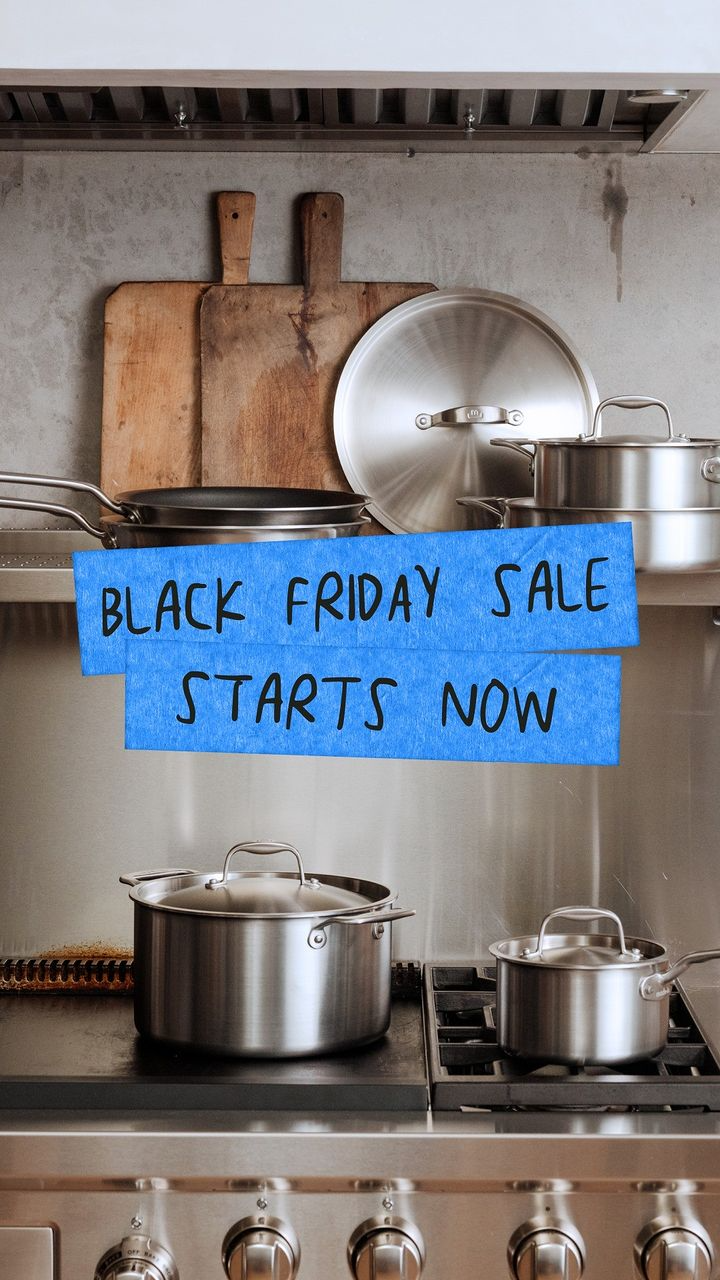
In an attempt to stand out on digital platforms, some brands went in the opposite direction, exploring analogue-inspired elements like hand-drawn typography, OOH mockups, and tactile textures like tape and marker pens. These creatives bring a unique, human touch that contrasts with the typical digital overload of BFCM.
Stepney Workers Club
stepneyworkersclub.com
This OOH ad aligns with the analogue trend, using a bold and simple design to create impact in a physical space and stand out from digital noise.

Percival
percivalclo.com
This ad leans into the analogue trend by showcasing the process of spray-painting the message, adding a raw, DIY energy and emphasising authenticity in action.

Made In
madeincookware.co.uk
This ad uses hand-drawn typography and textured tape to bring a personal, analogue feel to the polished kitchen setting.
2) Simple text animations
As platforms continue to favour video over image placements, it’s important for brands to diversify their content. One of the easiest ways to do this is through simple text animations. These are a quick way to grab attention without the need for heavy production, allowing brands to cater to different audiences types and cover all creative bases.
Black Sheep
uk.blacksheep.cc
This ad uses bold text animations and a minimalist design to deliver a clean, modern, and attention-grabbing message, perfect for Black Friday.

Maap
maap.cc/uk
This ad features clean, dynamic text making it visually engaging, ensuring the message stands out in a crowded digital landscape - ideal for capturing attention during Black Friday.

GRIND
grind.co.uk
This ad uses sharp text movements and a streamlined layout, designed to captivate viewers instantly. Its modern aesthetic and engaging animations make it perfect for digital campaigns during high-impact periods like Black Friday.

3) Creative short form video
Another effective approach to standing out is through short-form video content. These ads not only grab attention but also build brand awareness. Strong narrative-driven videos or playful creative that piques interest have a way of resonating with audiences, making them memorable while driving engagement.
Lox and Chain
loxandchain.com.au
The use of short form video in this ad creates an eye-catching and dynamic visual that grabs attention instantly.

TwoJeys
twojeys.com
This short-form video delivers a bold Black Friday message with 'Up to 40% Off,' using striking visuals of glass breaking and a balaclava-clad figure to capture attention instantly.

Carhartt
carhartt-wip.com
This short-form video for Carhartt features a bold 'Black Friday Ends Today' message, set against a striking black-and-white background with dynamic footage of models, driving urgency and encouraging viewers to act fast.

Pockies
pockies.com
This short-form video highlights the product range and Black Friday discounts in a way that grabs attention and encourages viewers to click through to

CHIMI
chimi-online.com
This short-form video for CHIMI sunglasses uses text in message-style bubbles, with one mimicking the typing indicator, as the sunglasses move across the screen, prompting viewers to click and explore more.

Affiliate trends
Affiliate marketing continues to evolve, with new strategies driving growth and engagement during peak periods such as BFCM. From cashback incentives to shifts in content monetisation, this section highlights the trends shaping the landscape and delivering strong results for brands.
1) Customers are still searching for extra incentives
Cashback continues to be the highest performing affiliate type across our clients as customers search for extra incentives, seeing average YoY growth of 130% from this publisher type across our clients globally.
Reviewing the platforms over the BFCM period, brands went aggressive, with some rates as high as 25%. We also noticed more creative strategies being executed, such as bonus cashback payments and rates differing by basket size and product type.
2) Start early, and even earlier with affiliates
In the lead-up to BFCM, we saw more advertisers launching their deals with affiliates on an exclusive basis. This helped them stand out before competitors went live with their offers.
Consider running an exclusive period with a high-performing publisher, ideally one tested earlier in the year. This approach can drive early spikes in revenue and help sustain performance throughout BFCM and beyond.
3) Content monetisation shifted from discount to listicles
This year, content monetisation shifted away from discount-focused messaging towards more listicle-style content on editorial sites. This change followed updates to Google’s algorithm, which impacted traffic to discount areas of websites.
Listicles allowed publishers to highlight key products and features in more detail, moving beyond broad, discount-centric messaging. The best results came from content publishers we had worked with throughout the year, whose audiences were already aligned with our clients.
On-site inspiration
This year, we’re spotlighting some of our favourite recent examples that showcase creative and effective ways to engage both new and existing customers. Perfect inspiration for driving BFCM sales!
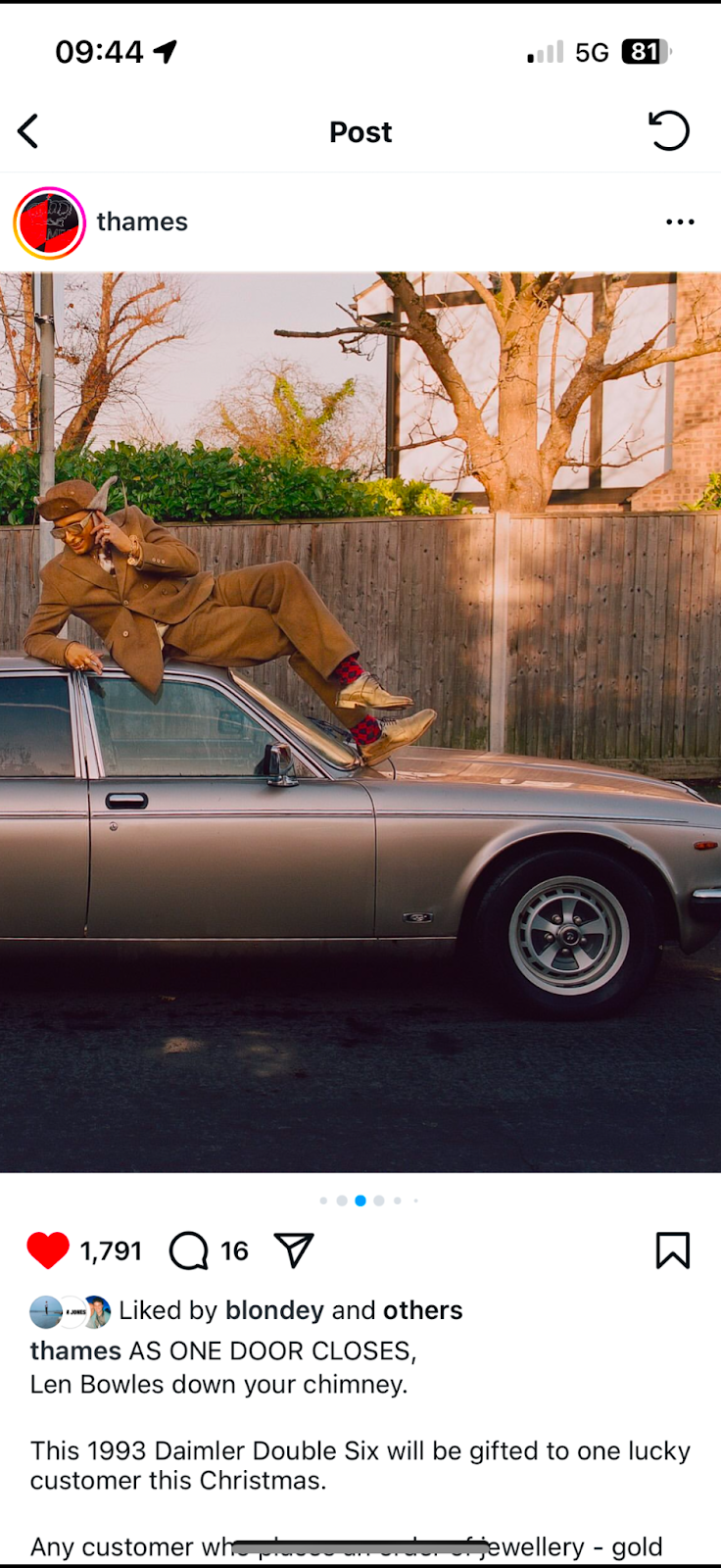
Thames MMXX
thamesmmxx.com
Kicking off with Blondey McCoy’s brand, Thames MMXX, which throughout the year has never ceased to amuse with its whimsical emails and product copy. For this Black Friday, the brand is offering a unique giveaway: a 1993 Daimler to anyone who purchases jewellery before the end of the year. This is a great way to drive traffic and sales without necessarily relying on traditional discounts. The big prize adds a sense of exclusivity and excitement, helping build both brand awareness and customer engagement during BFCM.
Prada
prada.com
Prada’s direct approach within Snapchat caught our eye, especially for a luxury brand. Their premium gifting proposition, paired with fun and engaging video content, encourages users to explore their gift guide on the site. This is a clever move, especially during BFCM when driving traffic and capturing attention is key - while still maintaining the brand’s luxurious image. It’s a smart way to tap into a younger audience and create buzz without sacrificing the high-end feel of the brand.

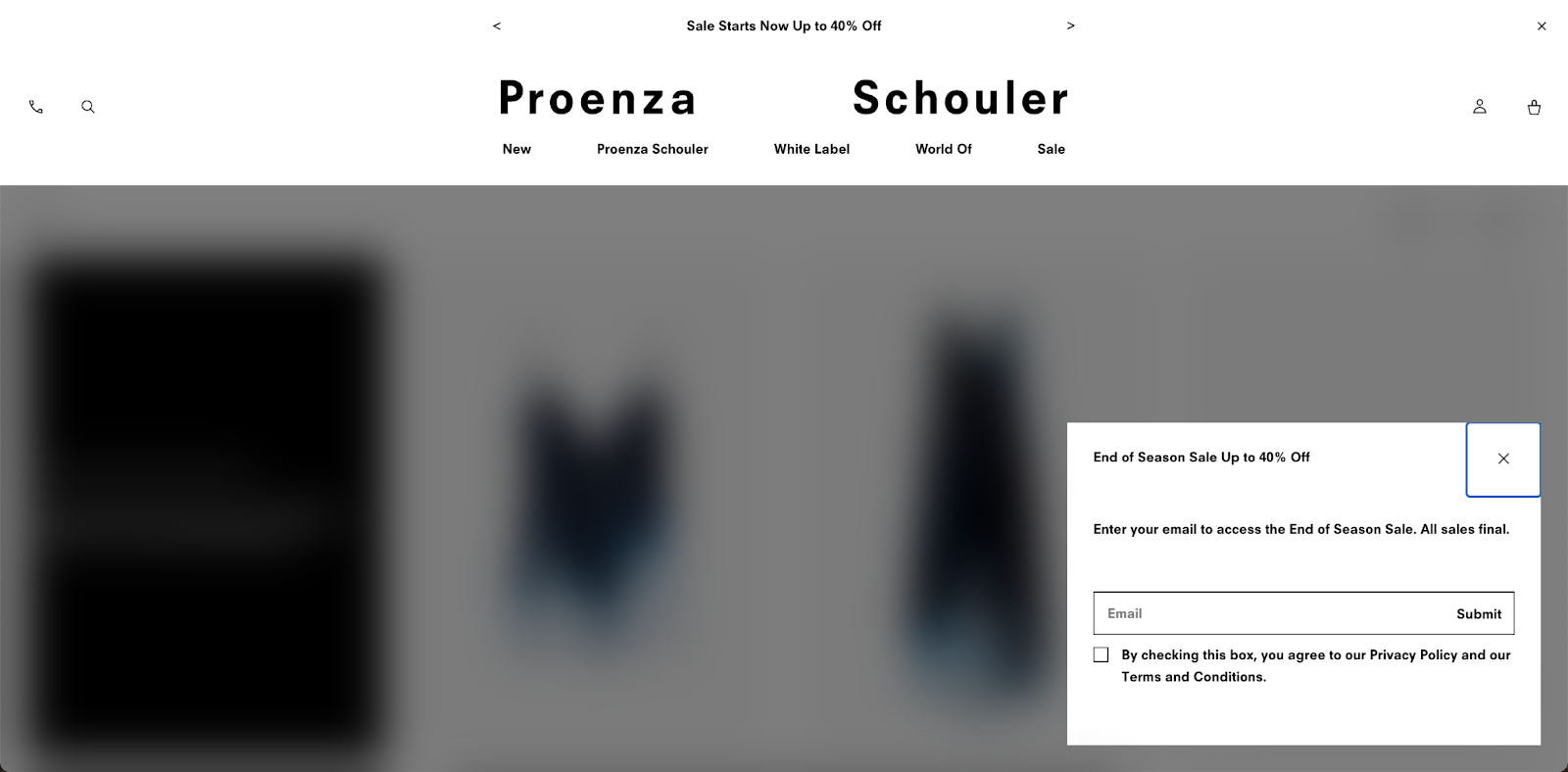
Pronza Schouler
proenzaschouler.com
Proenza Schouler’s approach to gating an exclusive collection on-site is a standout. Instead of locking down the entire site (which can impact user experience and SEO), they’ve obscured the product grid unless customers opt in. Once they do, the background clears and they can continue shopping. This strategy works well for BFCM, driving opt-ins and building anticipation. It’s an easy way to give customers a sense of exclusivity while making sure the shopping experience remains smooth.
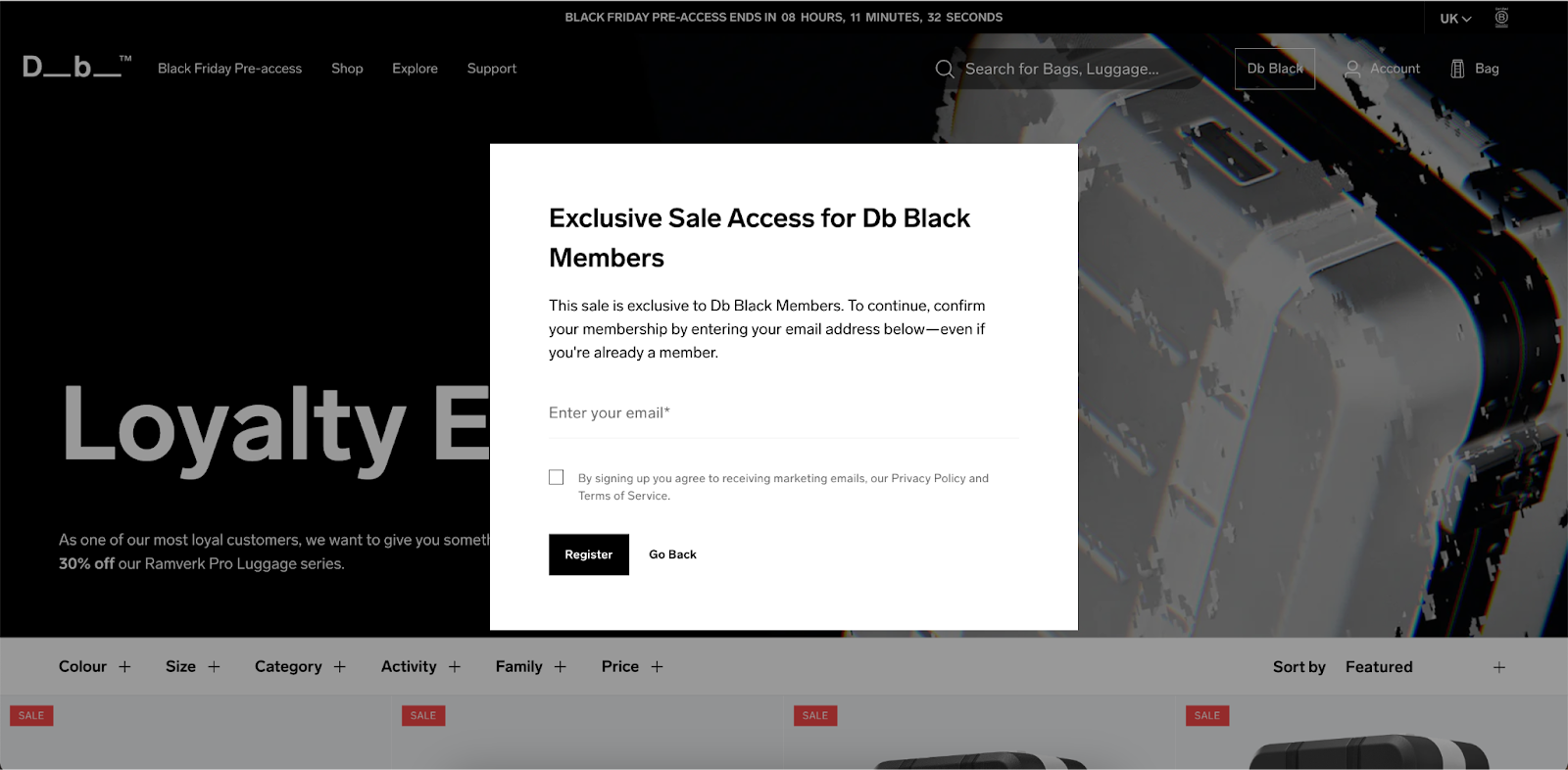
Db Black
dbjourney.com
Db Black, the bag and accessory brand, has been pushing its customer account program in a big way. To access their sale, customers need to sign up first, which is a great tactic for BFCM. It’s not just about a quick sale; it’s about building long-term customer loyalty and gathering first-party data. This approach sets them up for continued success well beyond BFCM, making it a smart investment in their customer base.
Performance marketing trends
Each year, the importance of Black Friday continues to grow for brands, with annual targets often riding on performance during these key weeks. This creates the perfect storm for inflated advertising costs, with CPCs and CPMs typically seeing significant spikes across paid media platforms.
1) Start early, start strong
One of the biggest shifts we saw from last year’s Black Friday was how early and aggressively brands launched their promotions. Traditionally, most brands would kick off their campaigns the Monday before Black Friday, or sometimes even the Friday before. This year, however, many brands launched as early as the Monday before Black Friday week, giving them a full two weeks of promotion leading up to Cyber Monday. We also saw more brands extend their promotions into the Tuesday after Cyber Monday to push for final sales.
In addition to this, many brands opted to launch their key hero offers right at the start. In previous years, we saw brands launch smaller discounts leading up to Black Friday, building anticipation but also causing some uncertainty for consumers about when to make a purchase, and as a result of this sales were heavily weighted towards the Black Friday, Cyber Monday weekend. This year, launching strong offers from day one - often with clear messaging that these deals would run through to Cyber Monday - encouraged customers to act immediately rather than risk missing out on a better offer later in the week.
2) Fake Friday
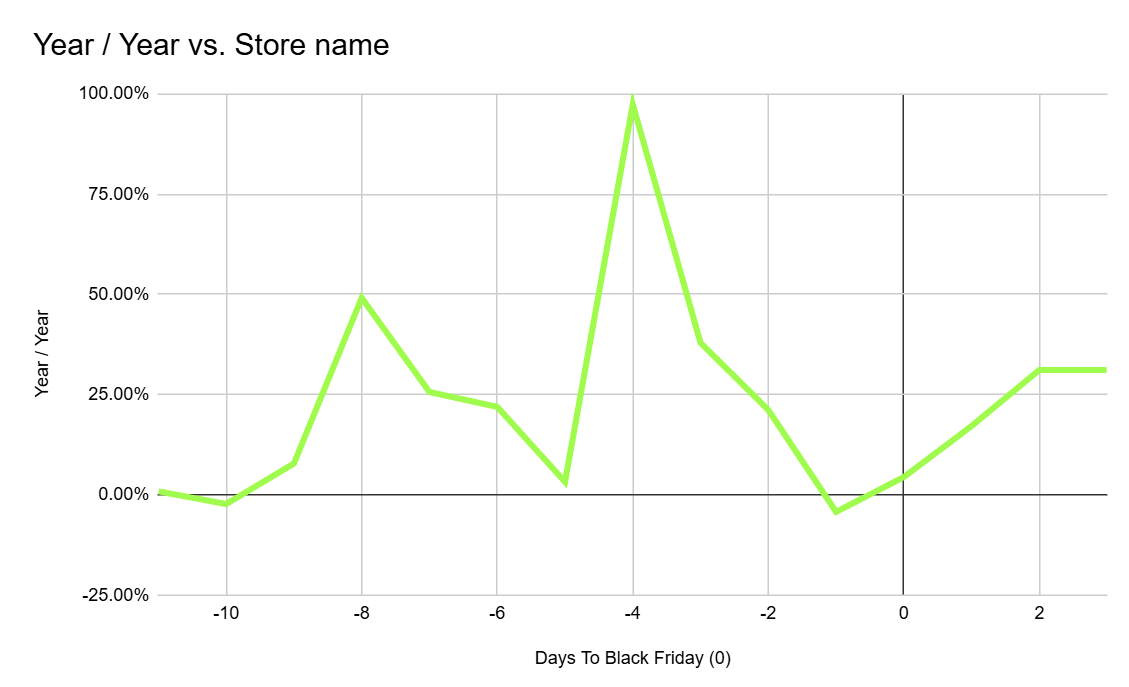
With promotions starting early and Black Friday landing later this year (29th November vs. 24th November in 2023), we saw a significant spike in sales on the Friday before Black Friday week (22nd November), often referred to as ‘Fake Friday’. Consumers often mistakenly think this is the start of the Black Friday deals, leading to high sales volumes that can sometimes surpass those of weekdays within Black Friday week itself. With less competition for ad space on this date, CPMs and CPCs tended to remain lower compared to the Black Friday week.
3) Upper funnel campaign types
A key trend this year has been the increased investment in upper-funnel buying models on Meta, particularly for engagement and awareness campaigns using video content. This trend continued into Black Friday week, with engagement objective campaigns seeing a huge increase in investment year-on-year in terms of percentage. Awareness campaigns saw a bigger increase with total ad spends up 70.45%, making them the second highest invested in campaign type. Understandably, the highest % of ad spend went through sales campaigns.
A trend we have seen throughout this year is an increased investment in more upper funnel buying models across Meta for engagement or awareness, especially when utilising video content. We saw this trend continue into Black Friday week, with engagement objective campaigns seeing a huge increase in investment year on year. Awareness campaigns saw a bigger increase in total ad spends up 70.45%, becoming the second highest invested in campaign type. Understandably though the highest % of ad spend went through sales campaigns which accounted for.
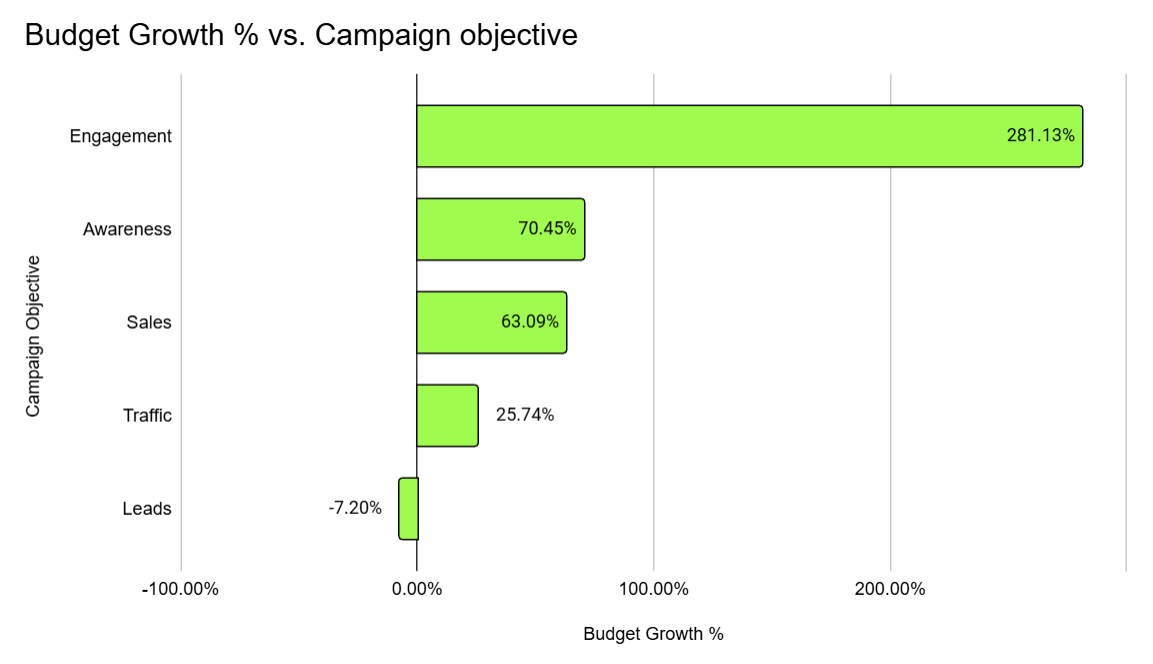
We’ve always recommended that brands allocate part of their budget to upper-funnel campaigns, especially during the more costly periods of the year. These campaigns can help combat inflated CPMs, as upper-funnel ads are most cost-effective for buying impressions. For example, global CPMs from November 18th to December 2nd this year averaged £9.30 for conversion campaigns, compared to £1.71 for awareness campaigns. The most successful brands leveraged awareness campaigns strategically, using tactics like targeting remarketing audiences to maximise reach at the lowest cost and combining traditional interest targeting to double down on high-value audience segments.
4) More spread revenue growth, lower ads costs
This year’s longer sale period, combined with increased consumer confidence to purchase earlier, resulted in two key trends in the numbers that are likely to be seen again in 2025 when Black Friday falls on similar dates.
Firstly, revenue growth was more evenly spread across the two-week period, with percentage growth much stronger outside of the typical Black Friday to Cyber Monday period. Brands that started their promotions earlier built trust with customers, encouraging earlier purchases. We expect more brands to adopt this strategy next year, locking in their year-on-year growth before advertising costs surge over the weekend.
Secondly, advertising cost inflation was lower than usual, largely due to the earlier promotional push. Brands that hit targets early and scaled budgets leading up Black Friday were able to avoid the sharp cost of increases seen over the key weekend. As a result, average advertising costs during the longer period were lower than in previous years. Meta saw a modest 2.8% increase in CPMs from November 18 to December 2, while Google saw a 6.2% decrease in CPCs year-on-year.
Final thoughts
Black Friday and Cyber Monday (BFCM) 2024 once again set new records, with impressive global sales and strong performances despite ongoing economic uncertainty. As we move into next year’s BFCM planning, here are a few key areas that could drive even stronger performance:
- Launch early to capitalise on the 'Fake Friday' peak, especially as Black Friday falls later in the month next year.
- Focus on one key offer, ensuring clear and compelling messaging to instill confidence in customers.
- Supplement conversion-focused campaigns with upper-funnel campaigns to maintain visibility as ad costs spike.
- Explore creative trends like interactive ads, user-generated content, and video formats to capture attention and boost engagement.
- Leverage affiliate partnerships, especially with influencers monetizing content through platforms like Awin, CJ Affiliate, and Rakuten, to expand reach and drive conversions.
- Focus on strategies that encourage account creation and first-party data collection to build loyalty and enhance customer experience.
By embracing these approaches, brands can stay ahead of the curve and continue to thrive in future peak seasons.
Subscribe to our newsletter
Our monthly newsletter is designed to be the most actionable and inspiring eCommerce newsletter in existence, combining examples of eCommerce innovation, benchmarking insights from the industry, and the latest news and eCommerce trends.
By signing up you are agreeing to our privacy policy.