
How to Prepare Your Affiliate Program for Black Friday - Trends from 2023 & Strategies for Success
With Black Friday and Cyber Monday approaching, preparing affiliates effectively is essential to maximise performance during peak season. The affiliate channel has become a powerful tool for reaching engaged shoppers during high-demand periods, with brands investing £1.7 billion in 2024 and many planning to increase budgets next year.
The recent State of the Nation 2024 report from the Affiliate & Partnership Marketing Association highlights the channel’s ongoing growth. However, simply having affiliates in place isn’t enough - targeted preparation is key.
How can brands prepare their affiliates for peak season? By providing insights from last year’s performance, outlining effective planning strategies, and highlighting best practices for achieving success in Q4, we walk through the best approach for preparing for peak. By taking steps to prepare affiliates, brands can enhance their visibility and drive significant sales during this crucial period.
What did 2023 teach us?
Each year, networks publish valuable insights in real-time to help brands optimise campaigns throughout the quarter. Networks like Rakuten, CJ, and Awin have trackers that update daily across the peak period to highlight how different verticals and publisher types are performing.
Unlike other digital channels, where most brands are partnered with one platform for that advertising technique (e.g., paid search via Google), identifying trends with affiliates is nuanced due to the amount of networks within the affiliate industry (such as CJ, Rakuten etc.).
By reviewing the largest three global networks (Awin, Rakuten, and CJ Affiliate), we identified key trends across all of them through their BFCM and peak trackers:
- ‘Health and beauty’ was the highest-performing vertical by far across networks, seeing strong increases YoY after declining since 2020 (CJ, Rakuten, Awin)
- Whilst fashion is seeing steady YoY increases across markets, luxury goods are seeing a decline compared to 2022 (CJ, Rakuten, Awin)
- Black Friday continues to be the peak trading day across markets followed by Cyber Monday. Spikes in revenue and increases in voucher code usage around 2-3 weeks before this day suggests when advertisers offers are launched
- None of our affiliate clients took part in Single’s Day. Awin has recorded a continued decline in performance since 2021, with many luxury brands that drive a significant share of Awin’s revenue on the day choosing not to participate in Singles’ Day promotions
How can you set up affiliates for success?
As brands rely on third parties to activate campaigns, a proactive approach is essential to ensure campaigns are booked and executed in line with the brand’s promotional calendars.
Get the basics right
The basics can easily be missed, so brands need to ensure tracking is optimised by utilising networks test transaction tools, who will then be able to give feedback on any issues with the setup. Additionally, brands need to check the product feed is running correctly and that all affiliates are on the correct, agreed commission rate.
Running an inactive report in Q3 will also highlight any gaps in the programme, showing dormant affiliates that could drive value throughout the peak period.
Both proactive and reactive approaches are needed
Programme Managers start receiving Q4 media decks in August or September, allowing them to book exposure early at the best prices. Although planning in this channel is more top heavy than others, reactivity is necessary to ensure brands are getting as much exposure of their promotional messaging as possible, for example, last minute listicle inclusions and last minute newsletter placements (that may become available at discounted prices).
Communication is key
Some affiliates partner with thousands of brands, and during peak periods, a brand’s messaging can easily get lost in mailboxes. Ensure your key affiliates are notified well in advance so they can schedule everything accordingly. The stronger the relationship that brands have with partners, the more likely they are to be front of mind, thus allowing more opportunities.
As much as a brand can plan, promotional planners can change and marketers need to ensure they remain agile, communicating any changes to affiliates, and ensuring any discount code details and dates are also amended.
How can you achieve success in 2024?
Through wider affiliate trends, we have established four key strategic pointers for brands to incorporate into their BFCM strategy this year.
Develop a cashback optimisation plan

Cashback publishers were by far the highest performing affiliate type during BFCM across networks. As up to 100% of commission spend goes straight to the consumer, it’s a great, cost efficient publisher to invest in as customers search for extra incentives for their BFCM purchase.
Sites like Topcashback (UK) and Rakuten Rewards (US) offer various exposure options throughout their site and newsletters, allowing brands to promote to member bases in the millions. Some brands may also want to opt for more targeted campaigns based on users’ buying behaviours through the platforms.
When creating a cashback strategy for the peak period, brands should consider:
- What is a profitable baseline commission rate and how this can be increased during sale periods. There are a range of considerations for brands when finding their baseline including margin, CAC targets, and competitors
- Ringfenced fixed budget for extra exposure within the platforms throughout peak
- Backend setup to ensure cashback can influence certain KPIs that are a focus for brands e.g., increasing % for new customers or tiered rates to increase AOV
Invest in lead generation with third parties
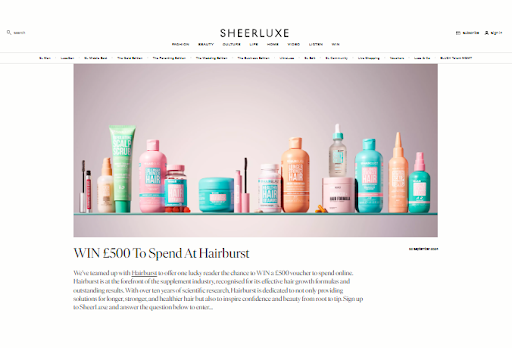
Lead generation through paid media ads before BFCM is a useful tool for brands to leverage, growing their mailing list to offer early-access exclusive offers pre-BFCM.
Publishers can support this activity by running lead gen campaigns through competitions with content publishers with proven low cost-per-lead (CPL) rates. This also allows brands to partner with reputable editorials at a lower cost than a paid partnership though advertorials. Leading UK publishers like Sheerluxe, The Handbook, and Olive Magazine all offer partnership opportunities through competitions throughout Q4.
Streamline affiliate and influencer activity
Both CJ and Awin recorded a significant increase in sales driven by influencers throughout Q4, with Awin recording 8% of global transactions driven by this publisher type. As the crossovers between influencers and affiliates get more blurred, it’s recommended that all influencers and influencer networks are notified of BFCM messaging as early as possible and kept aware of any changes that arise. Additionally, ensure all influencers that hold custom codes are informed of any changes, such as codes not being stackable on promotions throughout BFCM.
Capitalise on listicle success

Content publishers and subnetworks saw YoY growth across Rakuten and CJ. Without being able to rely on the discount code area of their sites due to the Google spam update that shook the industry earlier this year, we expect more listicle content throughout peak as editorials look for more avenues to monetise their site.
Sites like Vogue and The Independent create endless BFCM deal listicles, varying from broad ‘best of’ deals to more niche vertical-focused content.
Brands communicating their BFCM promotions to these editorials as soon as possible offers the best chance for any inclusions at a fixed cost. CPC platforms like Linkby offer brands the chance to be included in listicles like this on a performance model. Linkby has also released their ‘reverse PR’ option, allowing editorials to pitch to brands, whereas previously brands could only pitch to publishers.
Final thoughts
Incorporating affiliates in brands’ BFCM strategies can offer cost-efficient campaigns. The channel offers extensive reach to audiences in the purchase mindset through discount and cashback-led platforms. However, the growing diversification of the channel allows brands to create meaningful partnerships with other brands, influencers, and content publishers to further amplify their Black Friday messaging.
Reviewing last year's performance of clients and networks, our key takeaways for getting the best out of brands’ affiliate programmes are:
- Ensure the programme is set up for success and don’t overlook the basics
- Plan ahead for any changes to ongoing publisher-specific incentives
- A proactive > reactive approach is needed
- The earlier the better when booking in affiliate campaigns to ensure the strongest exposure and highest visibility
- Keep communication consistent throughout the quarter
Subscribe to our newsletter
Our monthly newsletter is designed to be the most actionable and inspiring eCommerce newsletter in existence, combining examples of eCommerce innovation, benchmarking insights from the industry, and the latest news and eCommerce trends.
By signing up you are agreeing to our privacy policy.