
Affiliate Fraud: How, What and How to Combat
Affiliate marketing has become an integral part of brands’ digital marketing mix, allowing them to connect with a wider audience while rewarding publishers for driving sales. But like any system built on trust, it isn’t immune to abuse. Affiliate fraud is a growing concern that undermines the integrity of the affiliate ecosystem, draining marketing spend if programmes are not monitored.
The recent discourse around the Honey coupon toolbar has put an intense spotlight on affiliate fraud, with concerns that it automatically applies affiliate-linked discount codes at checkout, potentially inflating commission payouts and undermining brands' intended affiliate strategies. While Honey has gained popularity for saving users money by applying coupons automatically, it has also sparked conversations about ethical gray areas in affiliate marketing.
Beyond the long-debated last-click attribution model, this has also raised concerns about fraudulent activities within affiliate marketing. Here, we’ll break down what affiliate fraud is and how it impacts brands.
Three examples of fraudulent activities affiliates can run
Although affiliate fraud can take many forms, three common methods are frequently used.
Ad hijacking
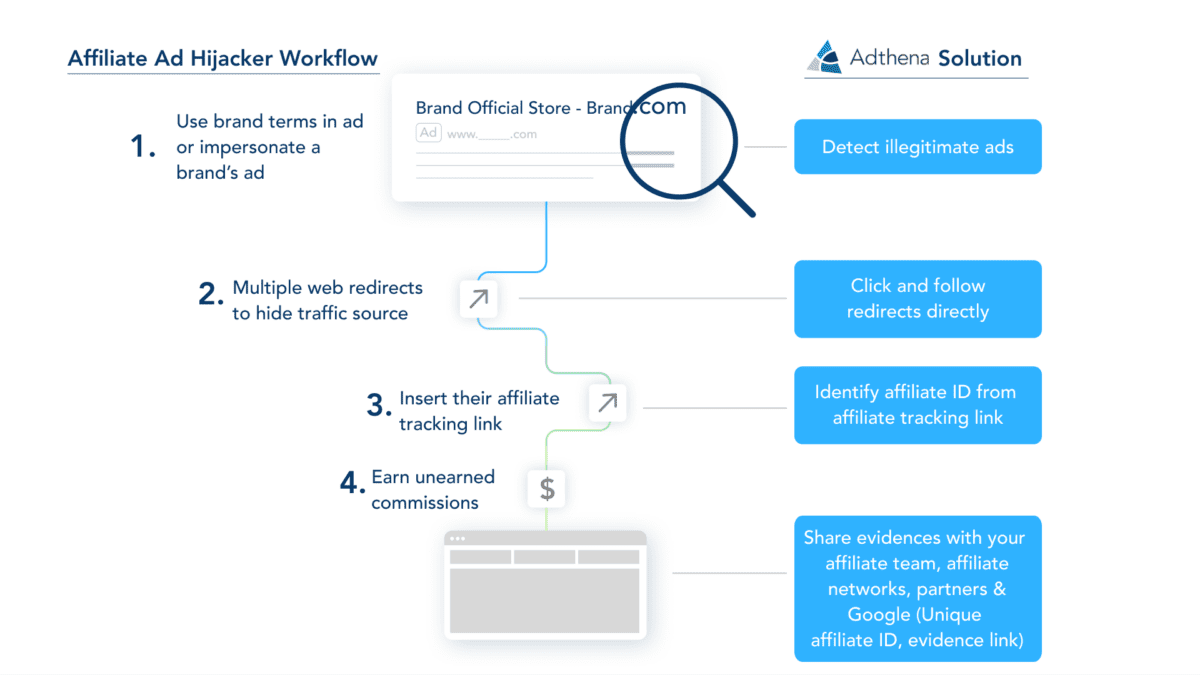
Affiliates can run pay-per-click (PPC) ads on search platforms such as Google to mimic brands, redirecting traffic to gain unauthorised commissions unbeknownst to its users.
This fraudulent activity is done by an affiliate impersonating a legitimate advertiser through PPC ads, often copying them using the same ad copy and key words so that the user is unaware. The ad then redirects users to false landing pages, often identical to the legitimate one it is imitating. If the user makes a transaction on site (or other action with a reward determined by the advertiser), the affiliate earns a commission.
They may also cloak their ads by showing one version of the ad to review systems and a different one to actual users to avoid detection by networks and merchants.
Cookie stuffing
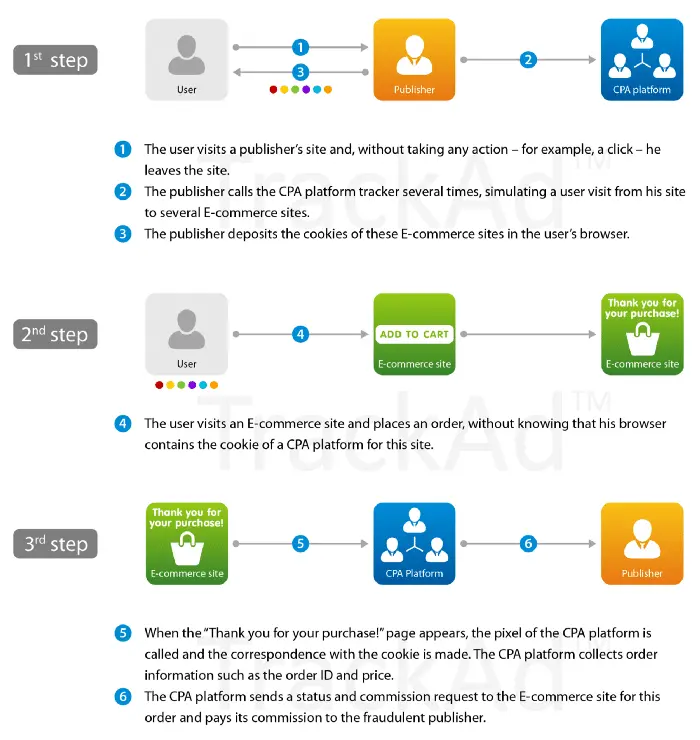
Cookie stuffing is another common method affiliates use to gain unauthorised commissions from advertisers.
Affiliates can ‘stuff’ cookies through various means, such as hidden pixels or pop ups on site, email links, browser extensions, and malware. The user will have affiliate tracking cookies dropped onto their device without knowledge or consent and without interacting with any affiliate ads or content.
If the user then makes a purchase within the standard 30-day cookie period, the affiliate running the fraudulent cookie stuffing will be rewarded for that transaction or lead. While the depreciation of cookies means this tactic is expected to decline over time, it remains a relatively common issue.
Click spoofing
Click spoofing is a fraudulent activity where affiliates simulate clicks to advertiser sites.
Affiliates can fabricate clicks through multiple methods, including using bots, automated scripts, and server-side requests. Although no real user interaction occurs, clicks are then reported through affiliate networks in the hopes that the user then goes on to make a purchase, thus allowing the affiliate to receive commission.
More advanced affiliates may also use IP spoofing and browser fingerprinting to make fake clicks appear as though they originate from real users in merchant reports.
What this means for the brand
For businesses, the consequences of affiliate fraud extend beyond financial losses. It can damage brand reputation, strain relationships with legitimate affiliates and compromise customer trust:
- Affiliate fraud impacts efficiencies:
Due to brands paying out on illegitimate sales, marketing budgets are wasted on fraudulent activity rather than on campaigns that drive genuine value. - Skewed affiliate performance:
Brands topline KPIs (eg CVR) can be heavily skewed when affiliates are running fraudulent activities, making it difficult for the brand to project growth and plan when base-level performance is misattributed. - Brand’s reputation:
Fraudulent ads can have a negative impact on the customer journey to site, leading to poor experiences and a loss of consumer confidence. - Negative outlook on the industry & other affiliates:
Affiliate fraud creates mistrust in the channel, discouraging investment and affecting legitimate affiliates who rely on the system’s integrity.
How brands can spot fraudulent activities
Identifying unusual traffic patterns and monitoring suspicious conversion rates can help brands detect affiliate fraud early. By implementing effective detection strategies, brands can protect their marketing investments and maintain healthy, trustworthy affiliate partnerships:
- Monitor platform KPIs
Regularly review platform performance anomalies, such as unusual click patterns (like spikes that don’t correlate with conversions), abnormally high CVR compared to other affiliate campaigns, or unexpected high performing affiliates emerging out of nowhere. - Review traffic sources & affiliate behaviour
Reviewing transaction reports supplied by the affiliate networks will show any patterns of suspicious behaviour, including multiple transactions made by the same IP address and device patterns. - Audit & review partnered subnetworks
All subnetworks should offer click referral reports, either provided by the publisher or access through transaction reports via the affiliate network. Questions should be raised if this data is not provided by the subnetwork.
What brands can do to limit fraudulent activities
By taking proactive measures, brands can limit fraudulent activities, protect their revenue streams, and foster more trustworthy relationships with affiliates.
- Leverage fraud detection tools
Use fraud detection software such as Brand Verity and Traffic Guard to monitor affiliate activities in real time. These tools can flag suspicious traffic, fake ads, and other signs of fraud. - Set clear program guidelines
Establish strict rules for affiliate behaviour, including restrictions on the types of traffic sources allowed, deduplication rules, and guidelines for ethical marketing practices. - Regular performance audits
Conduct routine audits to analyse affiliate performance metrics. Look for anomalies such as sudden spikes in traffic or unusually high conversion rates. - Vet thoroughly and blacklist fraudulent affiliates
Perform background checks before onboarding affiliates to ensure they have a track record of legitimate promotional activities. Block any affiliates you find running unauthorised activity. - Continuous education and communication
Keep affiliates informed about acceptable practices and educate them on the consequences of fraud.
Final thoughts
Affiliate fraud poses significant risks to brands, including financial losses, reputational harm and strained partnerships. However, by recognising red flags and implementing robust detection strategies, brands can mitigate the risks and maintain the integrity of their affiliate marketing programmes.
Key takeaways:
Understand fraud tactics: Brands should familiarise themselves with common fraud methods such as ad hijacking, cookie stuffing, and click spoofing.
Monitor KPIs: Brands should regularly review platform performance and affiliate behaviour for anomalies.
Leverage detection tools: Use advanced software solutions to spot suspicious activities.
Educate and communicate: Keep affiliates informed about programme rules and ethical practices.
Audit and blacklist: Conduct routine audits and block fraudulent actors.
By staying vigilant and proactive, brands can foster a healthier, more transparent affiliate ecosystem that benefits both businesses and legitimate affiliates.
-
AffiliateOverview of Global Affiliate Networks: Who They Are, USPs, and How Brands Should Pick When Launching an Affiliate Programme
-
AffiliateExploring CLO Platforms: What They Are, Key Benefits, and Why Advertisers Should Use Them
-
eCommerce Paid Media Creative AffiliateBlack Friday 2024 Recap: How eCommerce Trends, Creative Campaigns, Affiliate Networks, and Performance Delivered
Subscribe to our newsletter
Our monthly newsletter is designed to be the most actionable and inspiring eCommerce newsletter in existence, combining examples of eCommerce innovation, benchmarking insights from the industry, and the latest news and eCommerce trends.
By signing up you are agreeing to our privacy policy.