Published: Sep 2024
Type: eCommerce
Category: User Experience, Fashion

Loyalty Programs in the Fashion & Beauty Industry - 10 Best Recent Implementations
The fashion and beauty industries are saturated with loyalty programs that often rely solely on points and discounts. In an increasingly competitive market, these traditional tactics are no longer enough to build lasting customer relationships. The critical milestone of turning first time purchasers into second time customers is becoming harder than ever before. To succeed and differentiate themselves, brands must go beyond transactional rewards and focus on creating meaningful connections with their customers.
Data shows that 53% of customers who return for a second purchase go on to make a third, and that loyal existing customers have a 67% higher average order value than new customers.
In this blog post, we'll explore some of the most innovative and effective loyalty programs in the D2C premium fashion and beauty space. These examples demonstrate how brands can leverage loyalty to drive repeat purchases, boost customer lifetime value, foster brand advocacy and obtain invaluable first party data for enabling on-site personalised and hyper-segmented marketing strategies.
Kith
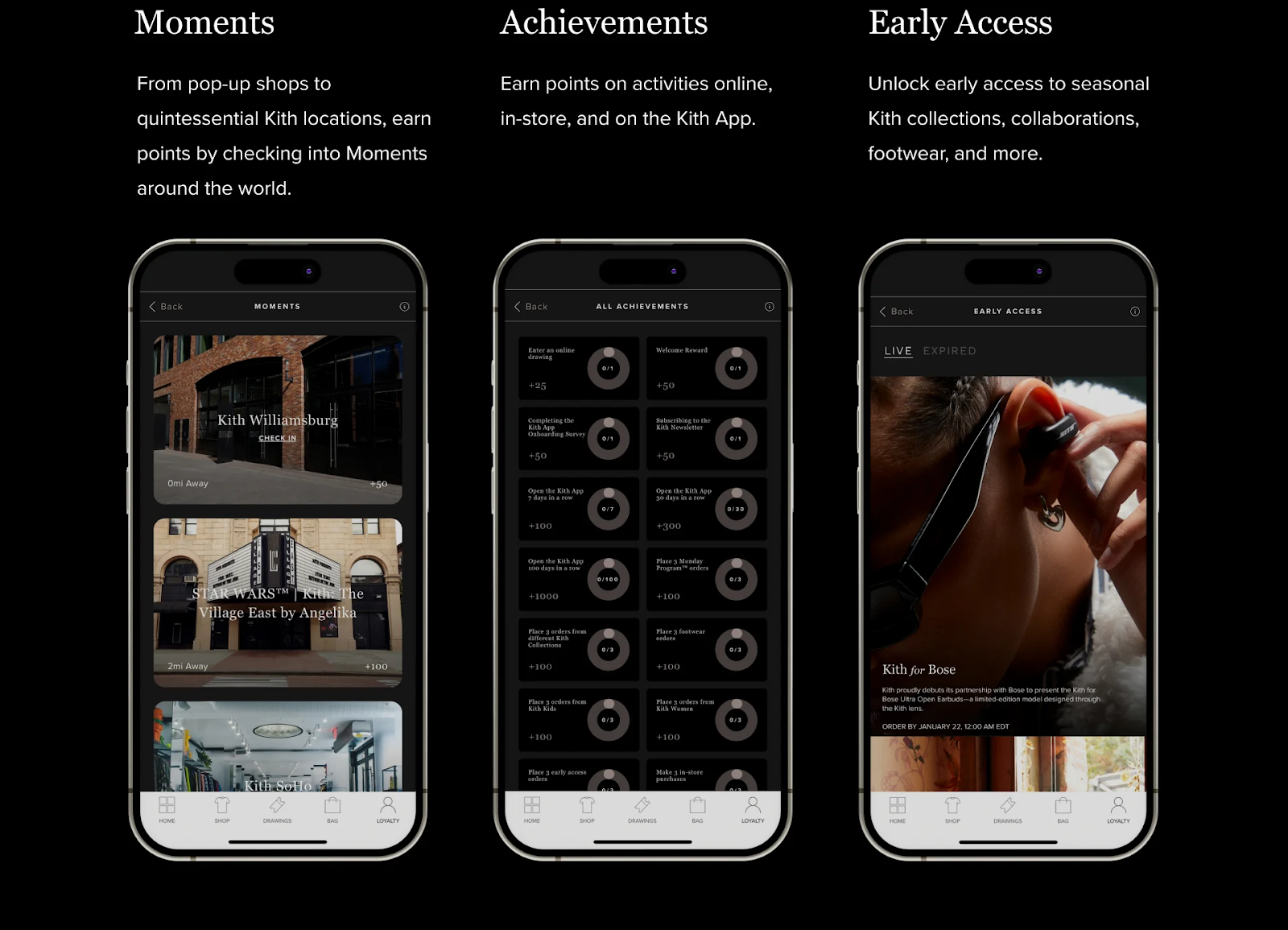
At the time of writing this, The Kith Loyalty Program could be considered the North Star of omni-channel reward strategies in the fashion and apparel space that truly focuses on personalisation and community engagement. Customers are auto-enrolled upon creating an account and access is only available through the Kith native app, allowing for a more exclusive and curated experience. In-app loyalty is a trend we’re seeing accelerate in the fashion vertical, however we consider Kith’s execution and attention to detail as best-in-class and highly thought-out.
The Kith Loyalty Program is a points-based tiered system where customers unlock rewards and benefits as they progress through each level, however there is a big focus on brand interaction and activity rather than attributing points primarily through spend.
Key features:
- The program pulls twelve years of historical order data across online stores and retail locations for retroactive points allocation, keeping existing customers front of mind.
- Members can accelerate point earning with ‘Achievements’ and ‘Moments’ across both physical and digital locations. These include checking into pop-ups, events and stores across the world, opening the Kith app everyday, entering an online drawing competition, placing orders from three different categories and updating shopping preferences and interests.
- Hyper-targeted rewards based on tier level include access to buy tier-specific exclusive clothing, accessories or shoes and access to purchase limited edition collaboration products such as the previously released Bose headphones. Most notably, customers in the highest ‘Vitality’ tier are invited to rare Kith community events as well as made to order capsule wardrobes and the ability to skip the queue at store entry and product launches.
- Overall, Kith's approach to loyalty is centred around building a strong community and providing exceptional value to its loyal customers whilst driving membership aspiration, setting a new benchmark for the industry.
Represent
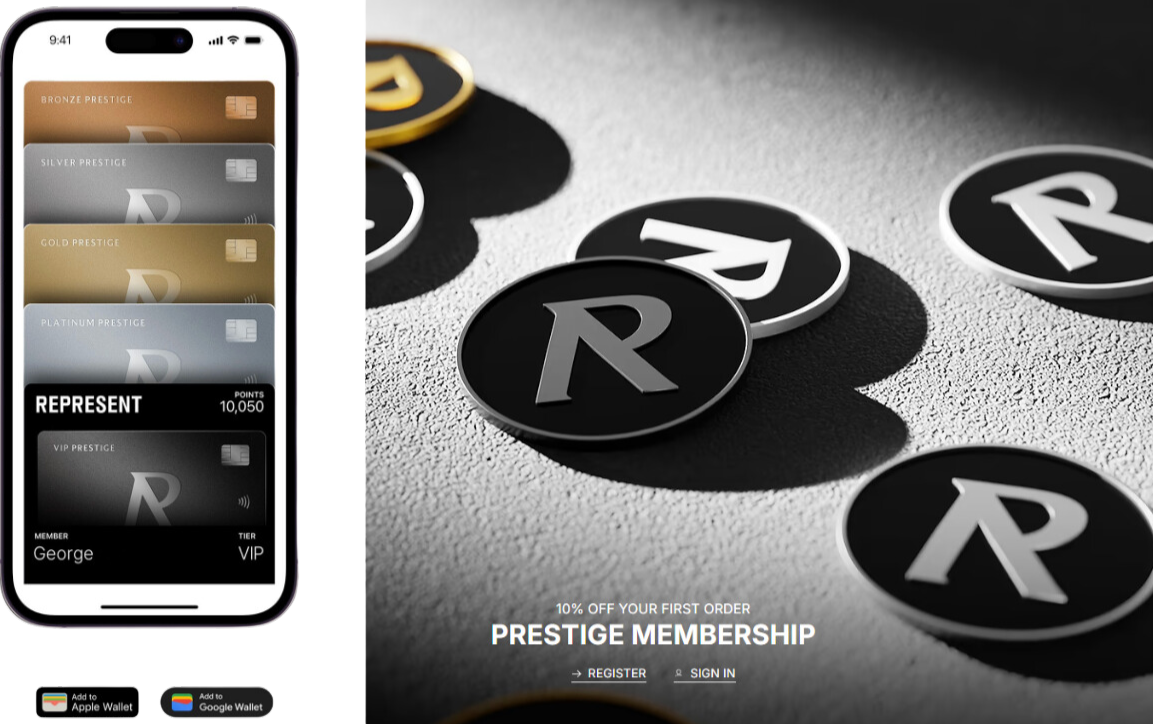
Represent’s Prestige Membership was launched a few years ago via their online store and native app, with the recent addition of the Apple and Google Digital Wallet Pass earlier this year. With the brand opening their first ever retail location in LA this year and other retail locations in the pipeline, Prestige is another great example of a loyalty program that seeks to merge online and offline worlds to create one seamless branded and community experience. Prestige (free to join) is a tiered points-based scheme, with customers qualifying for various benefits as they scale up the tiers including incremental member pricing, free gifts and early access to products and focus group discussions.
This is our favourite recent implementation of a Digital Wallet Pass tied in with loyalty, for the overall benefits but also from a UI/UX perspective.
Key features:
- Points and tier status is passed through to a customer’s Digital Wallet in real-time, providing a 360 experience across all brand touch-points.
- Customers can turn on geo-based push notifications which trigger when they are within a certain distance of a retail location (store or stockist).
- Digital Pass QR code can be scanned when shopping in-store to obtain points per transaction. Store staff are also given access to a customer’s order history and preferences via the QR code.
- Members get invited to physical events based on tier level with the digital wallet as an entry pass, allowing customers to earn points for brand interaction and contribution to the Represent community.
- An initiative that would work well for brands in this space is integrating with affiliated partners. Represent regularly hosts 247 run-club events across UK cities in collaboration with running app Strava, thus allowing members to gain points when joining events or using the app would be a great way to connect the community and drive interaction.
Overall, Represent’s execution of their Prestige loyalty program highlights their focus as a brand to bring together like-minded customers through targeted initiatives. This is a great strategy for nurturing brand loyalists.
Hugo Boss
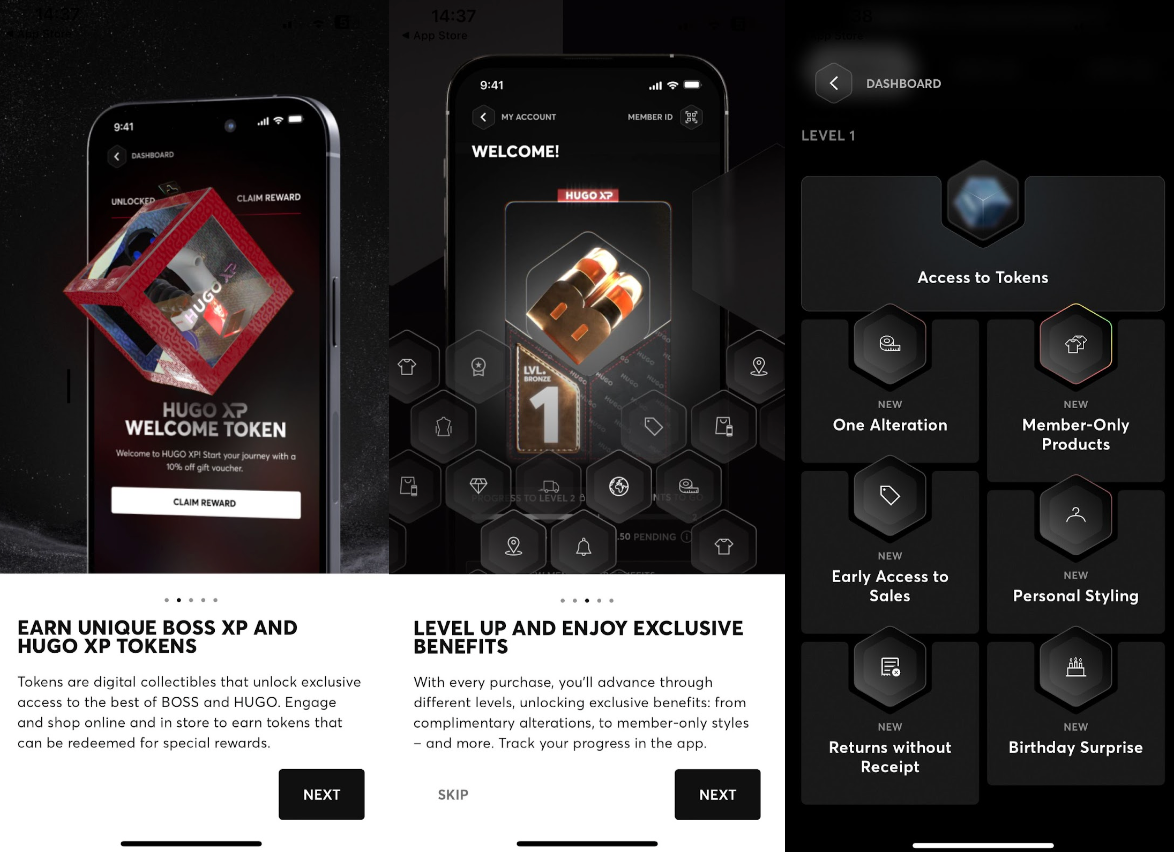
The Hugo Boss XP loyalty program differentiates their rewards proposition by incorporating elements of gamification via their native app. XP, which is free to join, combines the traditional features of a reward program (four levels that can be progressed through by collecting points on purchases online and in store), with block-chain driven Web3 elements such as limited edition wearable tokens (or NFTs) that are exclusive to the user.
Hugo Boss is calling this “the new membership program where you can get access to money-can't-buy experiences, products and services”, and here’s why we love it:
Key features:
- Each XP tier level gains access to a range of value-add benefits that transcend money-off discounts, providing a fantastic post-purchase experience and keeping customers bought into the Hugo Boss universe. These include personal styling, members-only products, priority customer services, access to the repair and renew service, VIP hospitality, access to global events, concierge service and more.
- Members can gain points by participating in challenges such as buying products from specific collections during set periods of time, visiting physical stores and transacting across channels, encouraging consistent brand engagement.
- Each tier level unlocks opportunities to earn Boss XP or Hugo XP tokens, including chances to win exclusive Made to Measure tailoring experiences at the headquarters in Germany, limited edition Roblox digital wearables that can be displayed and shared between members and special vouchers.
Overall, The Hugo Boss XP program is very well executed, especially the UX/UI within the native app which matches the brands premium brand identity and provides an addictive gamification element to encourage regular interaction.
Sephora
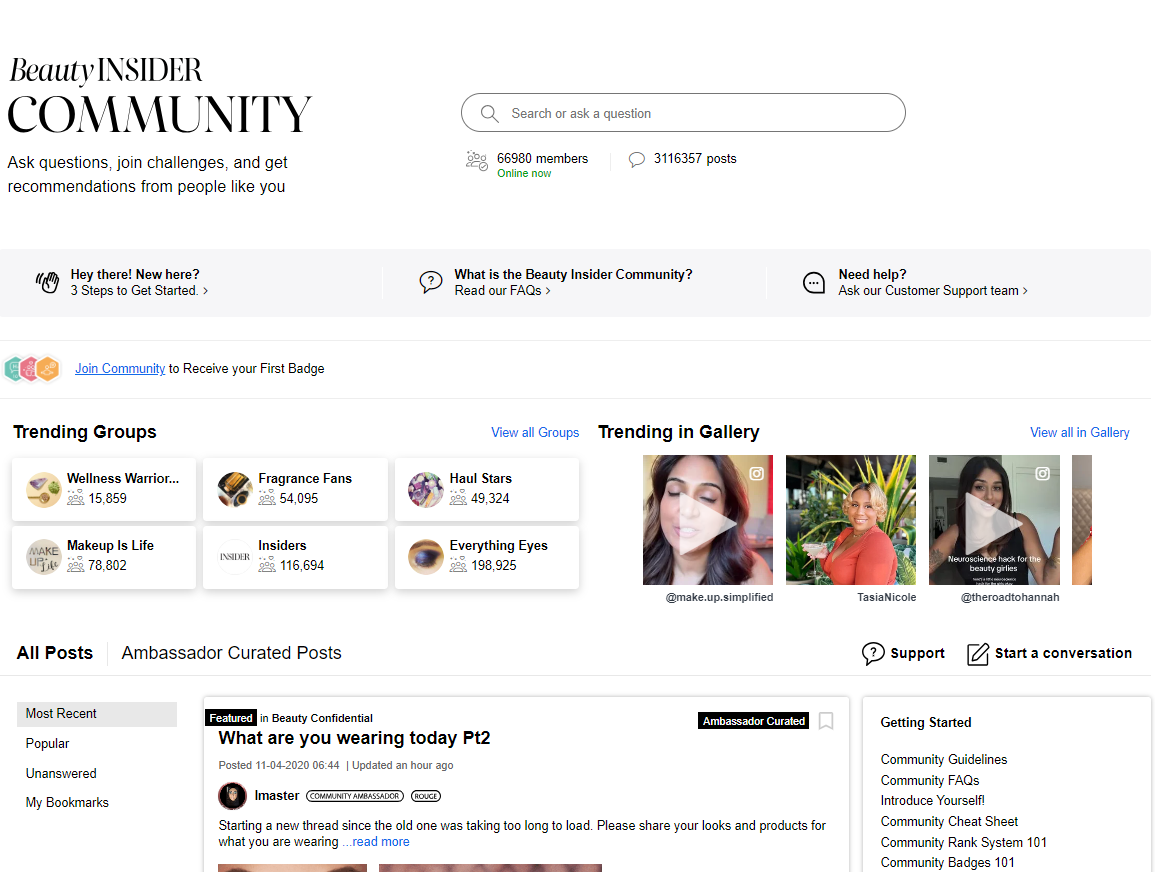
Sephora’s Beauty Insider program has been around for a number of years, but in recent months has gained renewed attention due to its innovative approach in community building, rewarding customers with personal gifts and ultimately levelling up to discerning customer expectations. For us, Sephora is the poster child for loyalty in the beauty space, with principles that can also be applied to fashion, here’s why:
Key features:
- The foundation of the program is points-based with three tier levels, with members earning points for spending. As they progress through the tiers, they unlock various rewards, including discounts, savings, and point multipliers.
- Upon signing up, members are encouraged to complete their profile with detail about their beauty preferences, skin and hair type, favourite brands, products etc. This is a great opportunity for first party data capture to provide personalised recommendations and tailored communications.
- Alongside spend, members can earn points by participating in challenges in-store, online and via the app which involve completing quizzes, purchasing specific products or engaging with content, bringing in the gamification element.
- Members get access to exclusive gifts and samples throughout the year, allowing them to keep discovering new products and brands - in our experience, a large portion of customers who receive samples go on to later purchase.
- Sephora sends personalised product recommendations regularly to members (via email and customer account) based on browsing and purchase history as well as preferences.
- Our favourite feature by far is the Beauty Insider Community - a members-only forum that allows users to join discussion groups around trending topics, share and ask for tips, tricks and opinions, join community challenges and view/upload tutorials around specific products. This is a fantastic initiative to allow members to connect and learn from one another which in-turn fosters advocacy and trust for the brand.
Sephora’s Beauty Insider members contribute significantly to company sales, accounting for circa 80% of revenue. The key differentiator is that the program's effectiveness extends beyond traditional transactional rewards, leveraging community engagement and emotional drivers to foster deeper connections with its customers that ensure they keep returning.
The Inkey list
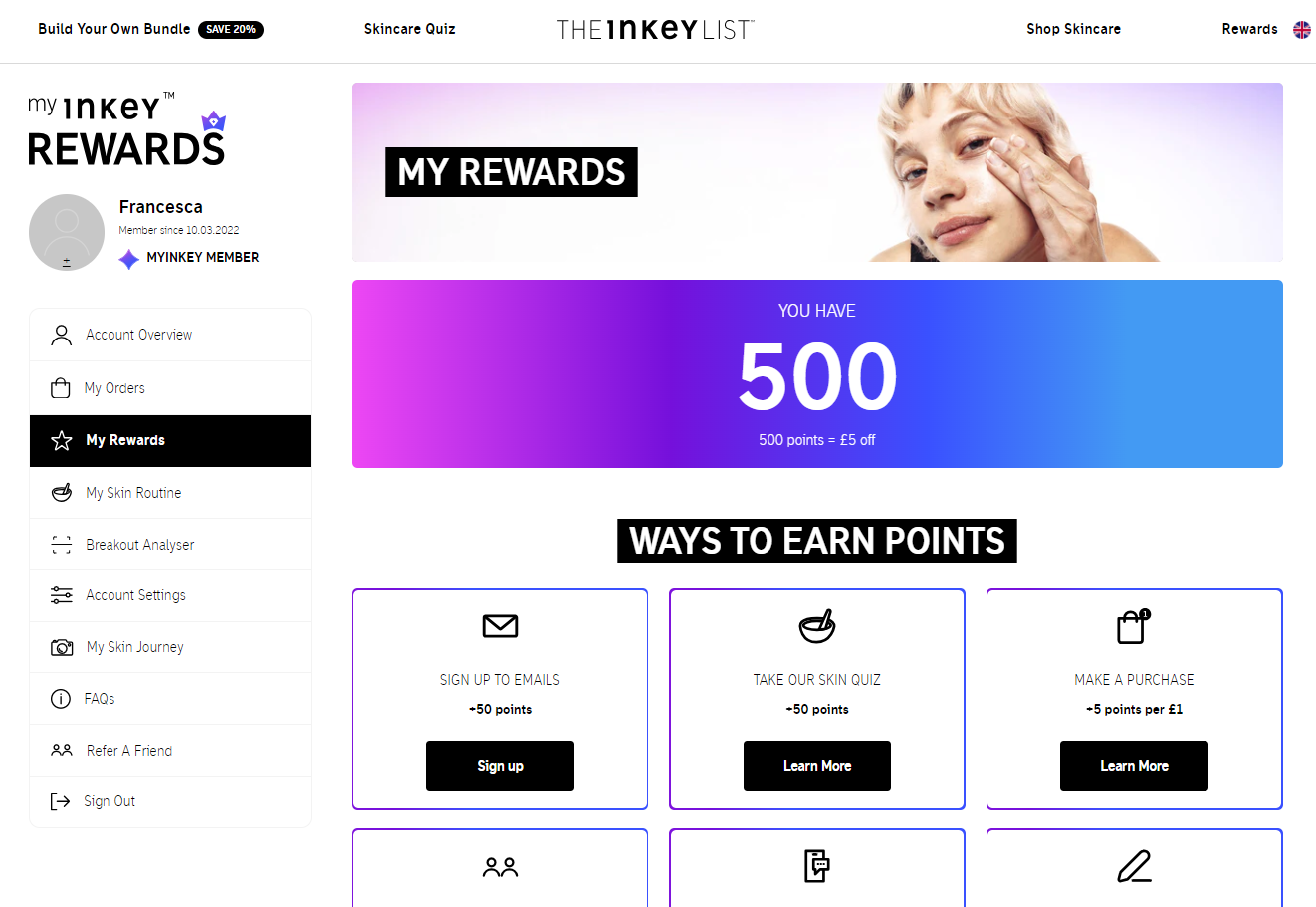
The Inkey List Rewards program is one that we’ve had our eye on for a while due to its clean UX and uncomplicated customer-centric approach. Mirroring key elements that have made Sephora’s program a success, The Inkey Rewards focuses on delivering personalised advice, knowledge and product recommendations, with a big push on first party data acquisition.
Key features:
- The three-level program is free to join and allows members to progress through the tiers with clear and accessible spending thresholds. Reward types increase incrementally and include free anniversary products, invites to exclusive events and member pricing at the highest tier. Points are redeemable in exchange for products, giving customers a reason to come back and shop directly.
- Data capture is a major focus with points awarded for completing their skin quiz and new ‘Breakout Analyzer’ tool which in turn allows the brand to provide targeted expert skincare advice within the account hub, building trust and credibility.
- The Account Hub is well thought-out and provides skin, hair and product routines that are bespoke to the customer based on personal data, purchase and browsing history. There is also a content section and the ability to document their skin journey as they try different products. This not only sets The Inkey List apart for being a true expert and consultant in their field, but gives members a clear reason to return to the site and log into their account.
Alo Yoga
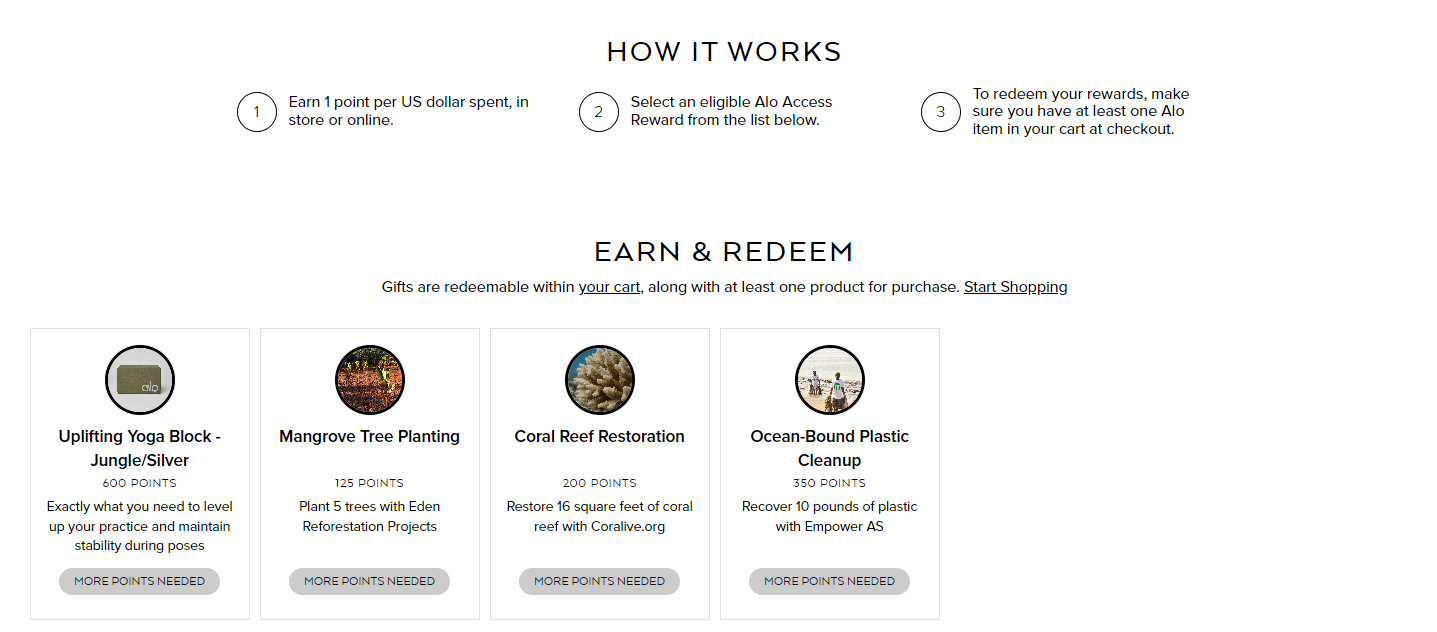
Alo Access by Alo Yoga is a reward program that is structured like many others in the gym and athleisure space with tiers and exclusive access to benefits as you progress, however the way that customers can redeem rewards stands out.
The brand reinforces its core values around sustainability and social responsibility by allowing members to contribute to tangible sustainability initiatives through their points balance. For instance, with full-price product purchase, a customer could redeem 200 of their points to ‘Restore 16 square feet of coral reef with Coralive.org’ or ‘Recover 10 pounds of plastic with Empower AS’.
This is a great example of a brand that is using its loyalty program to encourage its community to contribute to the wider causes they care about, fostering deeper connections with customers and driving value-add shopping experiences beyond monetary rewards.
Lulu Lemon
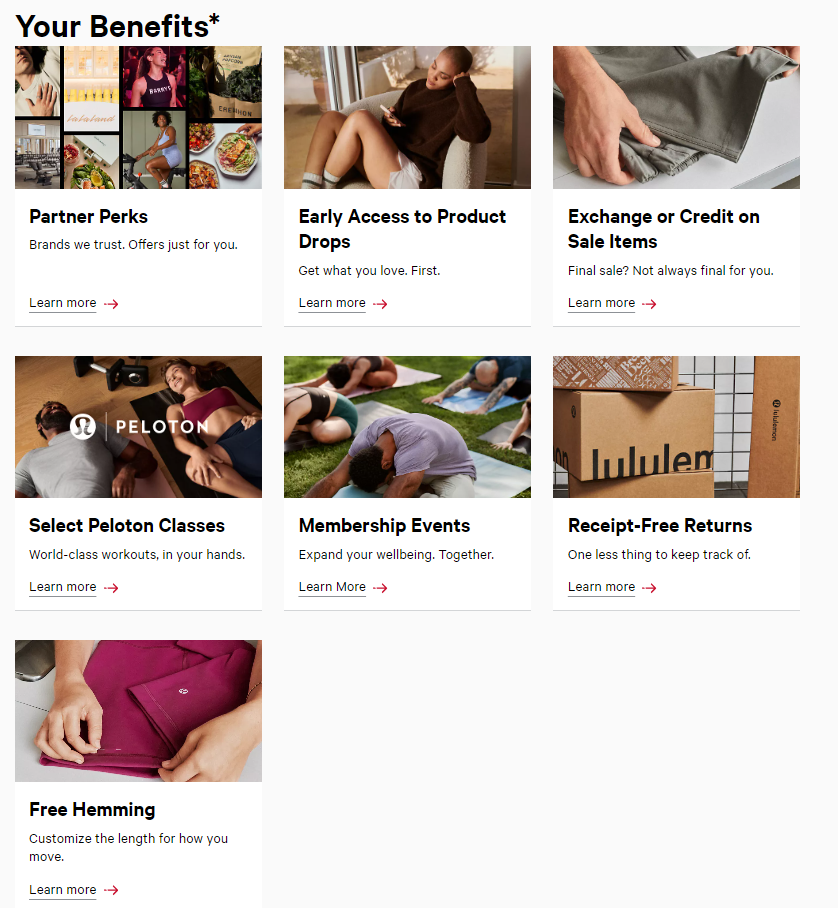
Established premium gymwear brand Lululemon takes a refreshingly democratic approach to their membership program. Becoming a Lululemon Essentials Member is free, with the brand focusing on offering the same benefits to all members through their online store and iOS App (only available in the US for now).
Key features:
- The benefits, which are available to all, include early access to product drops, a free hemming service on tops or bottoms to get the perfect fit, membership events and receipt-free returns.
- Most notably, Lululemon provides access to a vast range of perks with affiliated partners such as exclusive Peloton classes, 6-month membership discount on the Oura ring, 10% off classes at Barry’s bootcamp and many more. The partner offers are categorised by ‘move, fuel and restore’, reflecting Lululemon’s values and focus in the fitness space.
This is a fantastic example of how a loyalty program doesn’t have to follow the traditional structure and can be inclusive whilst still offering exciting and compelling reasons to be part of a brand community that reflects their lifestyle and preferences. This in turn helps to keep the brand front of mind and motivate repeat visits to the site/purchases.
Bandit
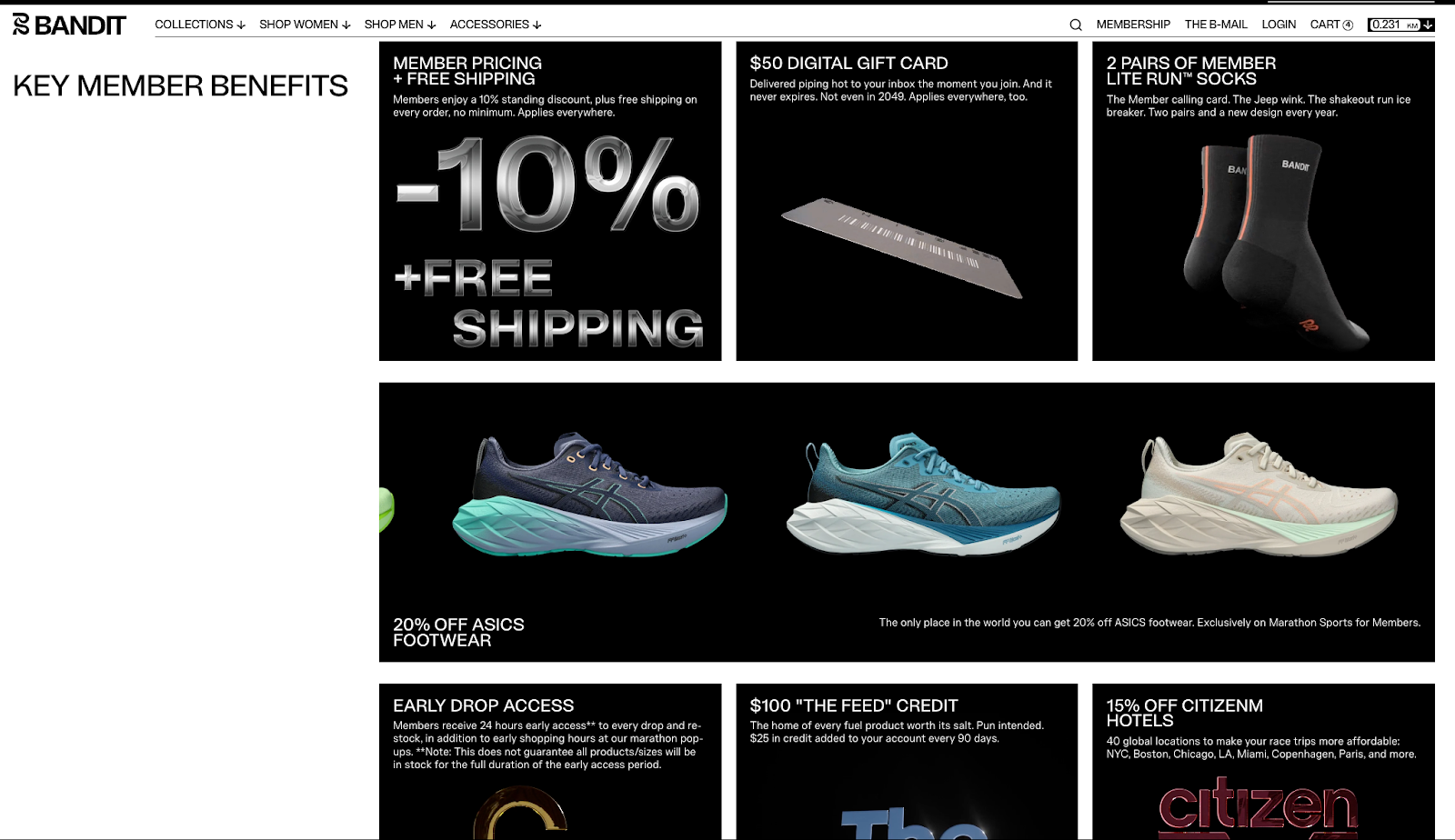
Bandit Running launched its Membership program a few years ago with the aim of being the most “value-packed membership in running”. This paid membership costs $125 per year, with members receiving a $50 gift card and pair of socks upon joining.
Key features:
- Member benefits that go beyond money-off offers and seek to build a close-knit friendship-like community, such as access to Instagram ‘Close friends’ for BTS access to shoots, launches and office antics - building connection and affinity.
- Ability to win exclusive race bibs for the most prestigious races each year as well as access to marathon pop-up access and pre-race mediations.
- Substantial discounts off a vast range of partner products including Theragun, hotel groups and nutrition brands.
Whilst paid memberships are not so widely adopted within the apparel space, we really like this particular implementation and online experience which offers a clear value proposition whose purpose is to enhance members’ lifestyles in-line with the brand values and product offering. It often works best for brands with a specialist product offering where it is intrinsic to buying into the brand experience.
Kiki World
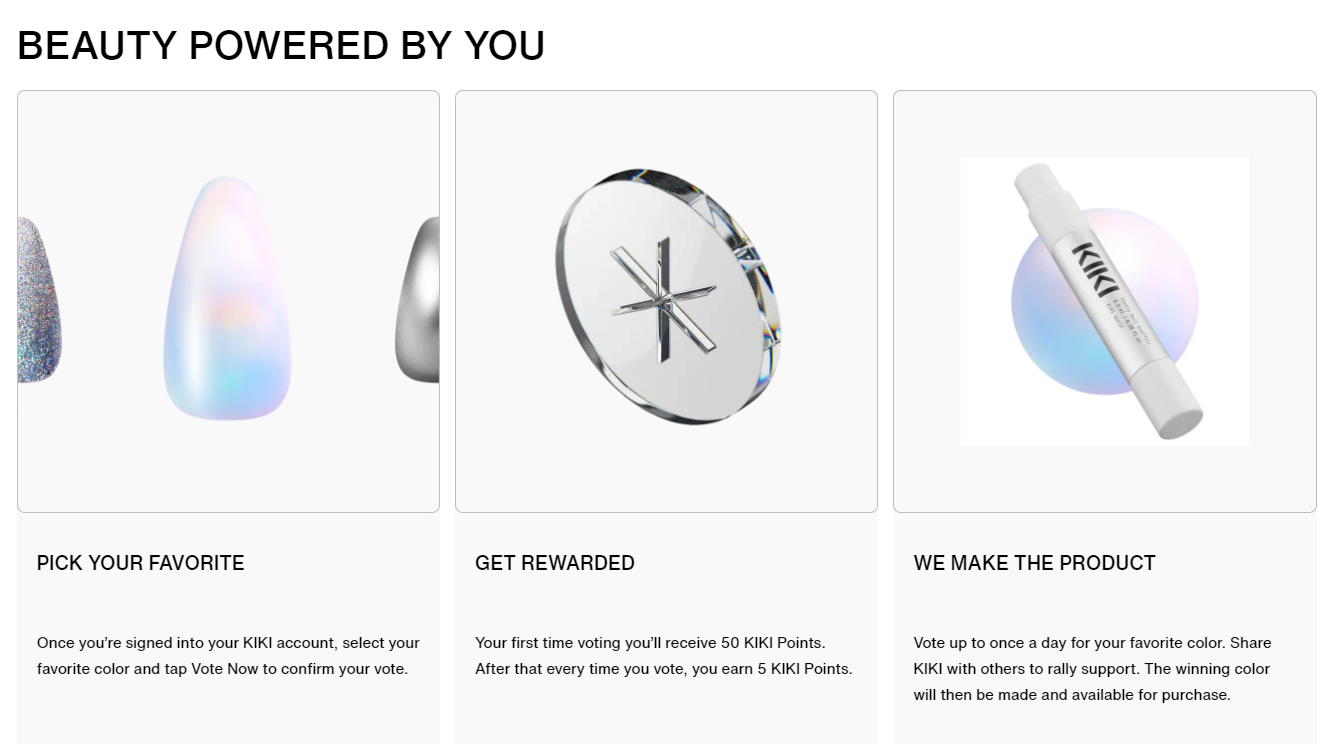
Kiki is a brand pushing boundaries in the beauty space by allowing their customers to co-create products in order to fuel deeper brand engagement and loyalty.
Kiki World’s membership is powered by Try Your Best - a digital play-to-earn platform that flips the script on traditional loyalty programs. Here's how:
Key features:
- Rewards begin the moment customers interact with the brand, whether through purchases or website activity or engaging in email marketing prompts.
- Near-field identification (NFC) tags track product opening, encouraging product exploration and usage, attributing points with time.
- Members can obtain NFT collectibles as they perform micro-interactions over time, which gives them access to exclusive rewards based on tier level. Higher-tiered members gain access to high-intent in-person experiences.
- Community members vote on colours and product details which in-turn earns them points, fostering a sense of ownership and excitement.
These strategies have built a strong community of over 5,000 members actively engaged on www.kiki.world. Whilst this concept and implementation may not work for all brands in this vertical, we like the idea of incorporating voting on styles and products to gamify brand engagement, create excitement and get customers invested in your brand.
Ouai
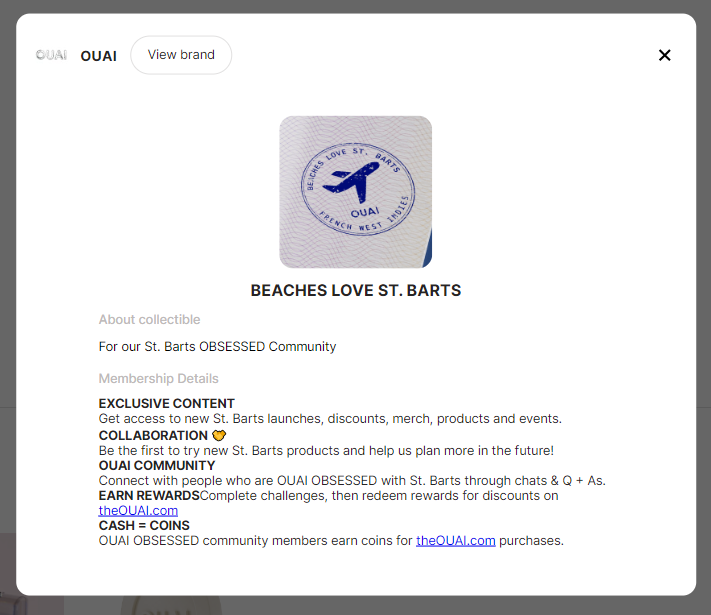
‘Ouai Obsessed’ recently launched by premium haircare brand Ouai is another solid example of a brand that has centred their rewards program around community engagement with an element of gamification around earning points for rewards. Also powered by TYB, this is a more practical, streamlined implementation that we’ve seen adopted in the wider D2C beauty space.
Key features:
- Members earn ‘coins’ for purchases which can be redeemed against products. Collectibles are earned based on coin balance which unlock rewards such as exclusive content, access to launches, merchandise and events (in-person and online).
- The Ouai community page allows members to connect with each other and participate in challenges such as talking about your favourite product or starting conversations within chat forums.
- The sign-up experience takes you into a TYB portal which houses other reward schemes the user is a member of (powered by TYB). There is certainly a benefit in allowing members to shop, earn and connect with other customers across like-minded brands (The Nue Co, Eadem, Glossier), however this ‘off-site experience’ could be seen as an interruption to the user journey and therefore put some merchants off going down this route.
Whilst not for everyone, this type of loyalty program creates a sense of novelty and excitement which many others in this space lack. Since signing on with TYB, its partner brands like Topicals, Dieux and Bread have seen a 28% increase in purchase frequency, on average, highlighting the impact community and advocacy can have on fuelling repeat purchase.
Final thoughts
The examples above show us that the way consumers are engaging with and thinking about loyalty programs is undergoing a significant transformation. While points-based systems still hold value, by combining transactional rewards with a strong emphasis on community and emotional engagement, merchants can build loyalty programs that not only drive sales but create a deeper, more meaningful connection that keeps them coming back for more.
Key takeaways:
- Move beyond points: Focus on rewarding brand interaction, micro-engagements, and community participation.
- Embrace the power of community: Foster a sense of belonging and advocacy through physical and digital events, forums, and co-creation initiatives.
- Gamification: Incorporate play-to-earn mechanics to make earning rewards and interacting with the brand intriguing and exciting.
- Digital Wallets: Adopt digital wallets to create an ‘always on’ user experience that helps to merge online and offline worlds.
- Alternative models: Explore alternative loyalty models like paid memberships with exclusive perks or programs centred around shared lifestyle values.
- Shared values: Build brand-affinity through shared social and environmental values.
- Partner up: Create strategic partnerships with complementary brands to offer exclusive discounts and experiences.
- Data: Focus on collecting valuable customer data to tailor personalised recommendations, communications, and rewards based on customer preferences.
- Don't forget about tiers: While offering some benefits to all members, tiered systems can still motivate customers to climb the ladder and unlock greater value.
Subscribe to our newsletter
Our monthly newsletter is designed to be the most actionable and inspiring eCommerce newsletter in existence, combining examples of eCommerce innovation, benchmarking insights from the industry, and the latest news and eCommerce trends.
By signing up you are agreeing to our privacy policy.