
4 Common Misconceptions of Affiliate Marketing
In recent years, the affiliate marketing industry has evolved significantly, offering businesses new opportunities to enhance their marketing strategies.
Affiliate marketing involves partnerships where businesses reward affiliates for driving traffic, leads, or sales. This model has gained traction due to its cost-effectiveness and potential for measurable results. However, despite its growing popularity, it often faces scepticism regarding its incrementality and the value it provides.
These misunderstandings can prevent businesses from fully leveraging the affiliate model to their advantage. We explore four common misconceptions - debunking myths, and highlighting how the channel can be a strategic asset for brands on their journey to success.
Misconception 1: “Affiliates are grubby”
One of the most famous quotes lingering is ‘affiliates are grubby’, a term stemming from a quote by the ASOS CEO 17 years ago when pausing their affiliate program.
“There’ll be no silly commissions being paid to grubby little people in grubby studios growing income at our expense, getting in the way of genuine sales.”
At the time, the affiliate channel was seen as the ‘Wild West’, with affiliates driving revenue through manipulating Google and the SERPs, making marketers lose faith in the channel. This was a pivotal moment for the industry, and networks invested in compliance tools and quality control to ensure brands saw the channel as a tool to reach new audiences and ultimately drive more sales.
As more sites seek alternative revenue streams, many have developed attractive affiliate propositions for brands. With the decline of print media, editorials have strengthened their commercial and digital teams, creating new opportunities for brands to invest in the affiliate model through advertorials, listicles, or organic content. This approach has proven effective.

Future PLC, a media house owning reputable titles like Marie Claire, Who What Wear, and Country Life, generated 10 million transactions and drove £81 million in revenue for their partners in 2023.
Additionally, established brands like Klarna have also become affiliates, leveraging their household name to build monetised platforms through affiliate marketing. Klarna's success extends beyond their shopping platform; they've introduced Klarna Creator, creating competition for existing influencer/affiliate platforms like LTK and Shoplooks, which have seen increased success as influencers adapt to the CPA model.

While it's understandable that the early days of affiliate marketing, characterised by aggressive tactics, led to a negative perception, the industry has evolved significantly. The introduction of compliance tools and quality control measures has turned affiliate marketing into a reputable and effective channel for driving sales and reaching new audiences.
Misconception 2: “Affiliates aren’t incremental”
Another common misconception is that affiliate marketing does not drive incremental value. Incrementality, in simple terms, refers to sales that would not have occurred without the channel's involvement. While all marketing channels can face questions about incrementality, affiliate marketing is often scrutinised due to its association with last-click attribution, particularly from voucher or cashback publishers.
Networks provide tools for brands to analyse where affiliates fit into the customer journey, offering valuable insights and strategy development opportunities. A straightforward way to view a program's incrementality is by examining the new customers it drives.
Beyond the black-and-white definition of incrementality, affiliates can drive value in various ways:
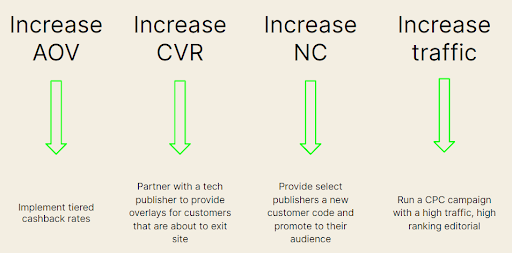
While it may seem that lower funnel affiliates capture sales that might have happened anyway, it is important to consider if other KPIs are improving due to the strategies in place. Brands should thoroughly analyse the data to understand what incrementality means for them and their affiliate program. By leveraging the tools and insights available, brands can make informed decisions about the true value of their affiliate marketing efforts, ensuring they maximise the benefits of this channel.
Misconception 3: “The affiliate channel runs itself”
While it might seem feasible for some brands to let an affiliate program run autonomously, effective management is crucial for high growth and success. Although AI advancements in affiliate networks offer benefits like curated publisher opportunities, automated reporting, and compliance tools, the notion of a fully automated channel is misguided.
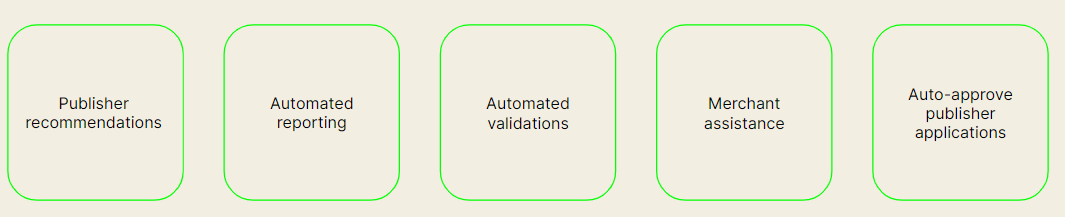
Network tools created through AI
Despite AI optimisations, the affiliate channel fundamentally relies on partnerships, which require human interaction for relationship building and strategy development.
Programs that operate solely on AI miss out on critical optimisations and recruitment opportunities. Recruiting suitable partners is essential for any affiliate program, as the absence of affiliates means the absence of a program. Human oversight is often necessary to assess the potential value of partners accurately.
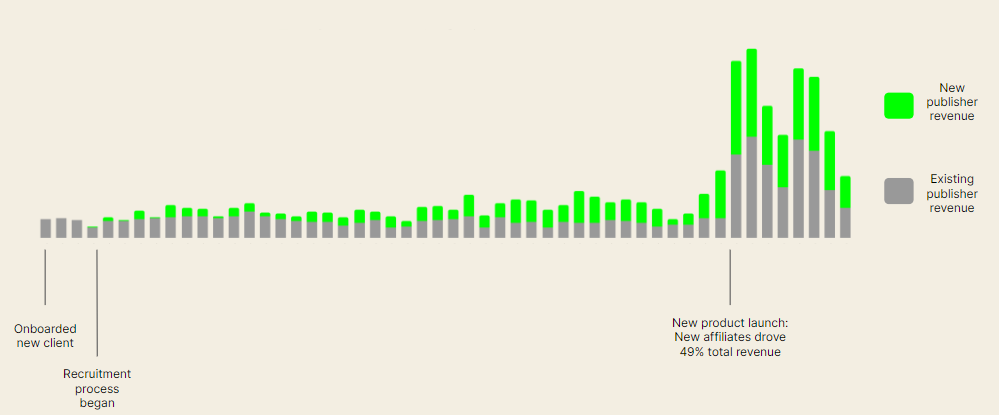
The above graph shows an account managed by our team, illustrating the impact of human optimisation versus a program left to run autonomously. By carefully selecting publishers aligned with the brand’s objectives.
Considering the rapid advancements in AI and automation, it's easy to see why some might believe the affiliate channel can be left on autopilot. However, the importance of human oversight in building relationships and making strategic decisions is crucial.
Misconception 4: “Higher commission equals more revenue”
Unlike other paid channels where spending more directly correlates to higher returns, affiliate marketing is more complex. Each publisher and publisher group requires careful consideration of their commission rate, influenced by factors like promotional activity, competition, and profit margins.
A common misconception we get from brands is that when performance is down, we can implement a programme-wide increase and see that translate into sales. However, this often leads to budgets being absorbed by publishers without benefiting the brand. Increased spending does not guarantee higher revenue.
For instance, our team restructured a clothing brand's affiliate account to ensure efficient growth. This approach doubled affiliate revenue in the first year and achieved a 33% increase in ROI through strategic commission adjustments.
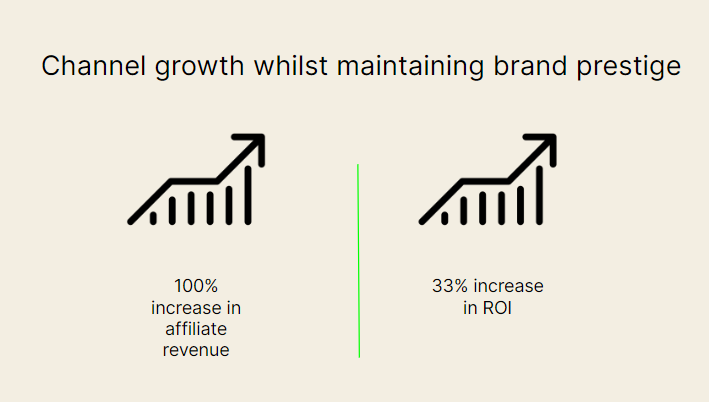
It is advisable to raise commissions with publishers who will provide increased consumer incentives or enhanced visibility. For example, increasing CPA with a key CSS publisher can boost brand visibility on the Shopping carousel, whereas increasing it with a voucher publisher may not provide significant gains unless negotiated.

When deciding on commission increases, brands should adopt a test-and-learn approach to see how optimisations with specific partners impact overall site KPIs. This process can start with the publishers themselves, who can offer insights into competitors' performance, brand benchmarking, and optimisation strategies, even with limited budgets. Networks like Rakuten also provide benchmarking tools that highlight areas where brands are underperforming compared to others in the same vertical.
While it's understandable that brands may think higher commissions will naturally lead to increased revenue, a more nuanced approach is required. Strategic adjustments and targeted increases, informed by thorough analysis and publisher insights, are key to driving sustainable growth.
Final thoughts
By addressing and debunking these common misconceptions, businesses can fully leverage affiliate marketing as a powerful tool for growth and success. Embracing the potential of affiliates, strategically managing relationships, and focusing on comprehensive metrics can help brands experience the full value of this channel, driving sustainable growth and long-term success. The four main takeaways here are:
- Affiliates have spent years building trust with their own audiences and have become brands in their own right.
- Brands should review metrics beyond revenue to see how affiliates are driving value.
- A well managed programme leans heavy on authentic relationships and shouldn’t be left to run autonomously.
- Spend should always be strategic, and more commission does not always equate to more sales.
If you are interested in building and growing your affiliate programme, please feel free to get in touch.
Subscribe to our newsletter
Our monthly newsletter is designed to be the most actionable and inspiring eCommerce newsletter in existence, combining examples of eCommerce innovation, benchmarking insights from the industry, and the latest news and eCommerce trends.
By signing up you are agreeing to our privacy policy.