
Product Page Best Practices for Luxury and Premium Brands
For luxury and premium eCommerce brands, a high-quality product detail page (PDP) is crucial. By providing comprehensive information, including product photography, sizing details, and shipping information, a PDP empowers potential customers to make informed decisions without the need for an in-store visit. This is particularly beneficial for both first-time customers at the top of the funnel and repeat buyers planning their next purchase.
So, how do brands optimise their PDPs and enhance consumer engagement?
1) Information hierarchy
An information hierarchy is a fundamental consideration which must not be underestimated, as a poorly organised layout can significantly impact the user experience. The product information needs to be strategically arranged on the site and in a logical order, prioritising crucial information at the outset, followed by supplementary details. With users spending an average of only 50 seconds on luxury product pages, information should be presented in easily digestible sections to scan easily.
We recommend the layout to be as follows to maximise performance:
- Title
- Product description
- High quality pictures and videos
- Price
- Sizing
- Shipping information
- Sustainability factors
- Call to actions
- Visual and shoppable UGC
2) Product education
Providing detailed information on the product page will help to equip users with enough information for their purchasing decision, ultimately converting them into customers.
This needs to be closely reviewed alongside the information hierarchy, and also prevent users from feeling overwhelmed by too much information at once. However, it is important that the item being described is presented accurately and in a detailed manner. Alongside a detailed product description, here are some important elements to include:
Comprehensive sizing guides
Understanding product sizing is crucial for consumers when making purchasing decisions on fashion items, especially when they can't physically try items on. Given that sizes vary across clothing styles and brands, providing detailed information can result in concise and effective communication. By providing comprehensive sizing details brands can also mitigate return rates, as 38% of consumers say an improper fit is the primary reason for returns.
For international sites serving multiple countries, offering localised sizing guides is also essential. Simplifying the process with an intuitive drop-down menu enables users to switch between sizes, accommodating different preferences - for example, enabling UK viewers to convert sizes into EU measurements.
Self-Portrait

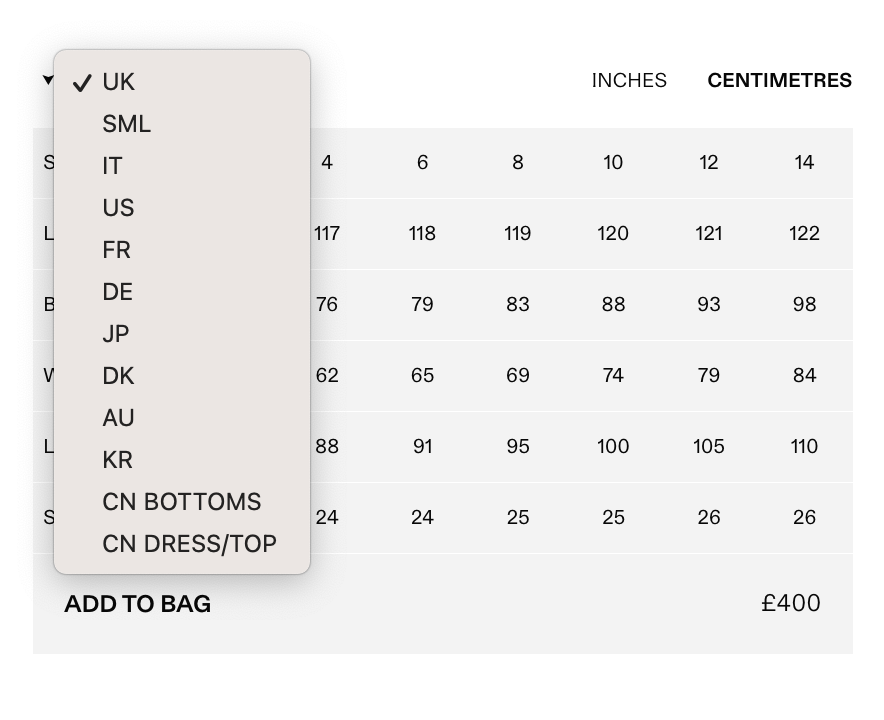
Self-Portrait offers a seamless and sleek sizing experience, enabling users to quickly convert between different sizes. Their detailed sizing guides include both body and garment measurements, accompanied by size conversions, tailoring to the users' preferences. Additionally, they provide a visual diagram of the item, pinpointing specific areas such as the waist, low hip, and length measurements. This visual aid simplifies the process, allowing users to easily match up measurements and make informed decisions.
Shipping information
With 64% of users searching for shipping cost information as early as the product page, ensuring upfront transparency regarding additional details (such as delivery costs and import duties) is vital to bridging information gaps and avoiding future frustrations. This will help to build trust, credibility, and boost consumer confidence.
This is particularly important for luxury brands as by providing localised shipping details and clear tax information for international orders, it encourages direct purchases over wholesalers.
In addition to shipping details, providing comprehensive product availability options can also be key. This includes options such as in-store pickup and the ability to reserve items, which can streamline the shopping experience. Having a customer-centric approach not only increases convenience, but also strengthens brand loyalty and encourages repeat purchases.
Acne Studios
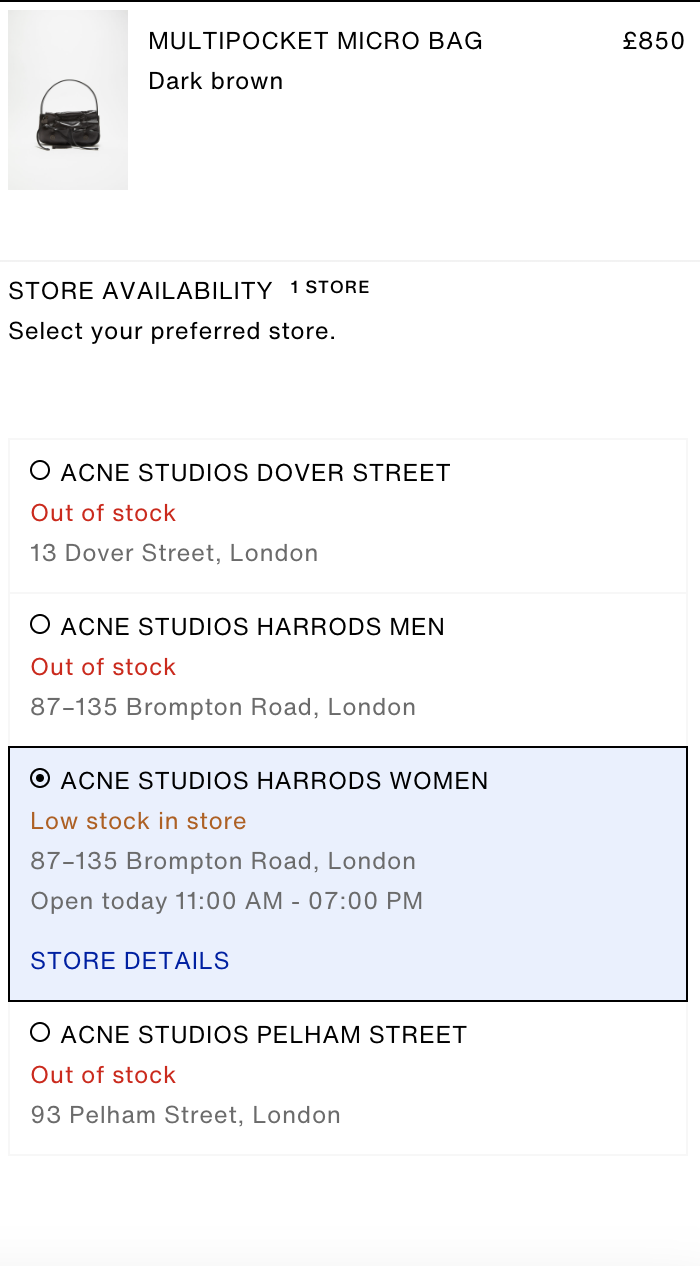
Acne Studios personalises the user experience by leveraging the user's location to deliver precise information about the nearest store for item collection, including its availability.
High quality photography and video
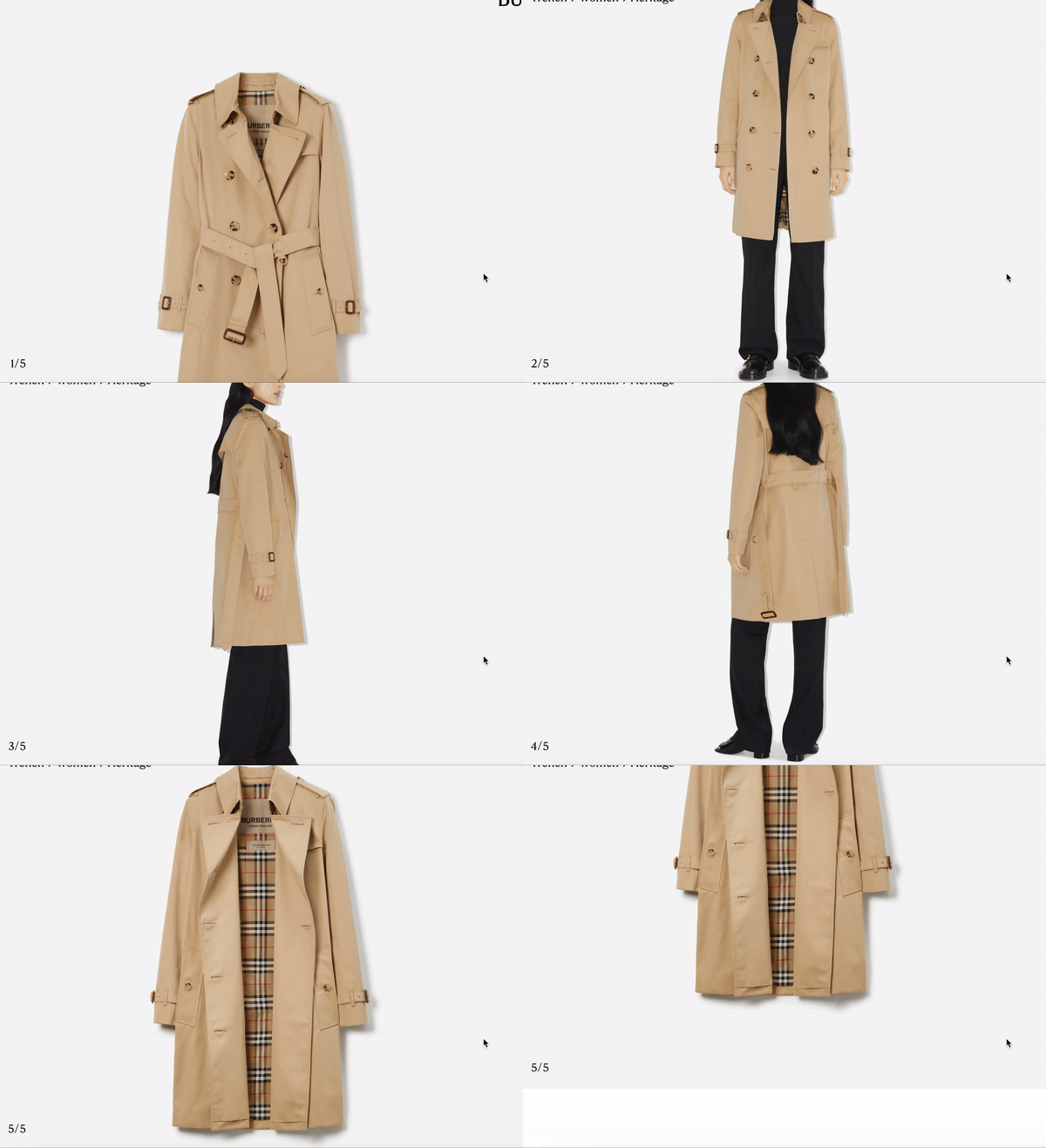
As users cannot physically interact with the items, brands need to provide high quality photography and videos to allow the user to effectively evaluate the product. While including multiple high-resolution product images from various angles is advised for a thorough understanding, large image sizes can substantially slow down loading times, compromising the user experience. The Digital Experience Benchmark Report 2023 found slow page loads as a leading frustration factor amongst 18.1% of session users, highlighting the importance for brands to address this issue on their PDP.
Burberry
The simple, sleek design not only reinforces Burberry’s luxury brand image, but it also utilises lifestyle imagery effectively to assist consumers in envisioning the product on themselves. With a mixture of lifestyle imagery and standalone shots, the PDP offers a well-rounded visual experience.
Sustainability factors
As consumer demand for sustainability rises, luxury brands need to include this information on the PDP, considering it's a key factor influencing consumer’s purchasing decisions. This can be conveyed in interactive ways, for example, by the user hovering over particular sections in the supply chain to reveal additional information. These actions help to both educate and influence the consumer in their purchasing decisions.
However, this interactive approach must seamlessly align with the overall site and luxury brand image. Providing detailed insights into the product's journey, including CO2 emissions, water usage, and labour, demonstrates the brand's conscientiousness about its impact.
Comprehensive sustainability information is not just an expectation; it will soon be legally mandated, highlighting its increasing importance in the business landscape. This emphasises the need to ensure compliance with upcoming regulations, particularly the Digital Product Passport in the EU by 2026. If you would like to find out more about how luxury brands are embracing sustainability, read more here.
Nudie Jeans
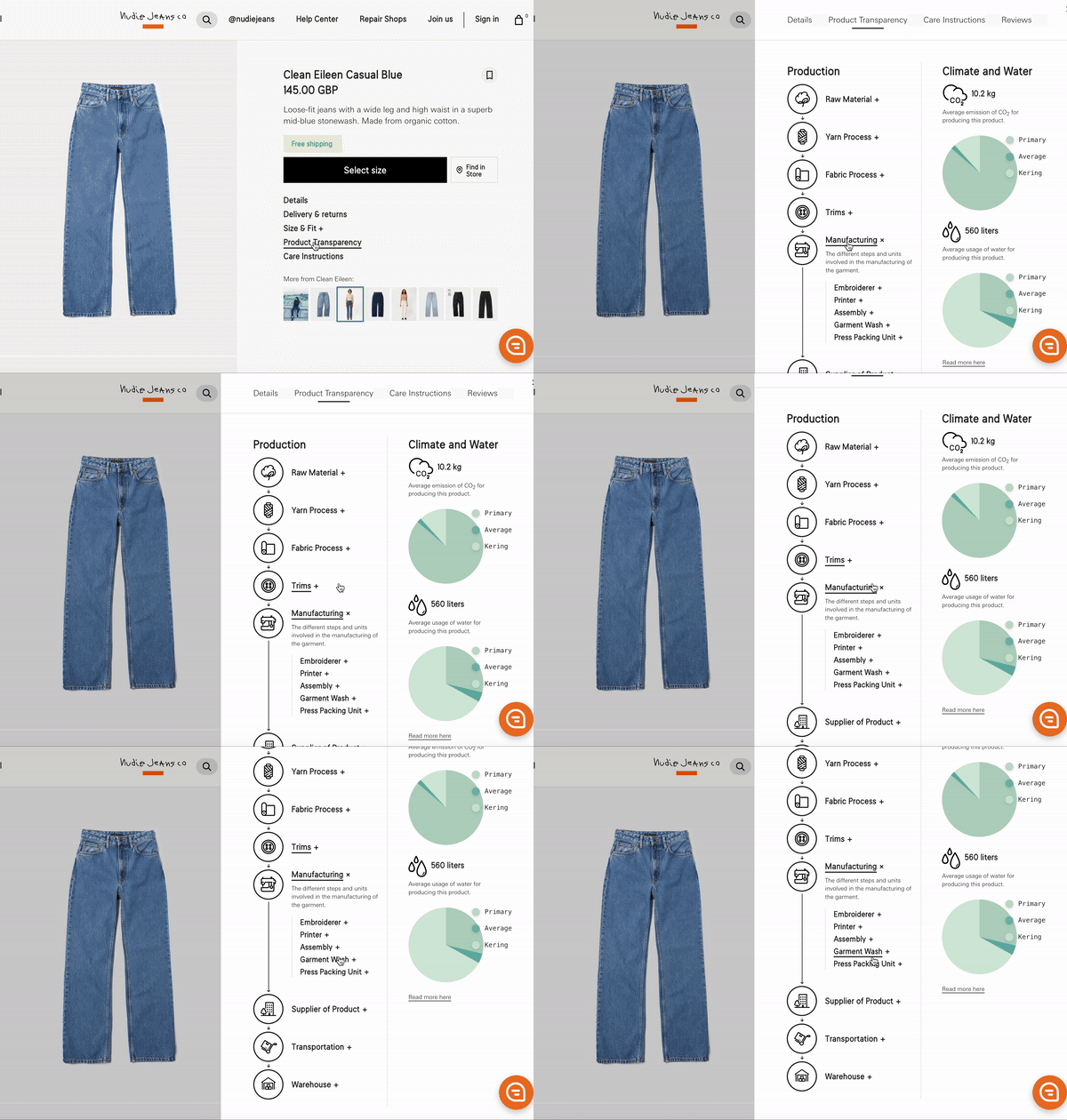
The user-friendly interactive layout actively encourages viewers to find out more regarding the product's supply chain. Nudie Jeans offer extensive details about the process, including materials, suppliers, warehouses, trims, fabric processes, and more. A nice touch is that they include whether Nudie Jeans have visited each site under the respective sections. This not only fosters transparency but also is important in maintaining and enhancing consumer confidence in the brand.
3) Customer reviews
Feedback from previous or existing customers serves as a powerful trust signal. However, in the luxury and premium sector, the approach to displaying this information may vary.
Written reviews are effective for technical luxury items like Rimowa suitcases, but most luxury apparel brands prefer not to display direct customer opinions. Instead, they can utilise size review data to indicate if a product is ‘True to Size’, ‘Fits Large’, or ‘Fits Small’, a strategy that Frame Denim uses.
This insight is derived from customer reviews and can then be presented in alignment with the brand's image, ultimately enhancing user confidence in the decision-making process.
Goat
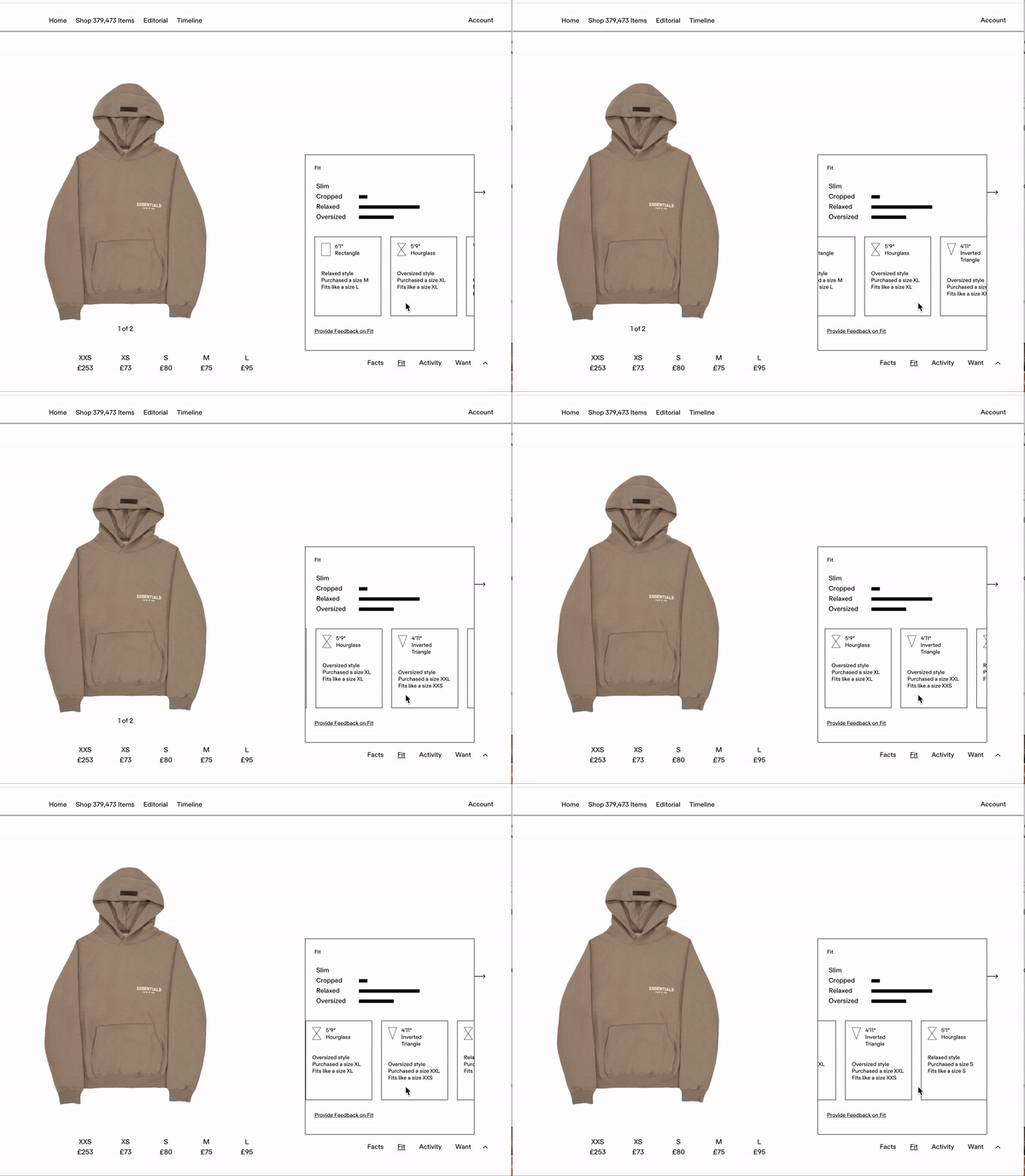
Using a carousel-style display, Goat incorporates consumer reviews into their PDP to provide valuable information for potential buyers. These reviews include anonymous details such as the reviewer's height, body shape, the size they purchased, and their experience with the fit of the item, providing comprehensive information to aid other consumers in their decision-making process.
4) Conversion tactics and average order value (AOV)
Sticky add to cart
This pivotal feature, typically situated at the bottom of the page and remaining fixed while scrolling, plays a key role in streamlining the checkout process, boosting conversion rates, and reducing cart abandonment. According to a Growth Rock study, implementing the sticky add to cart function can increase orders by 8%.
Considering that 76% of users access luxury websites via mobile devices, optimising for mobile browsing is essential to effectively engage this significant portion of the audience. As mobile users have limited screen space, the sticky add to cart feature becomes particularly valuable as a conversion tactic. Without this feature, scrolling through the page may disrupt the purchasing journey, potentially leading to distractions, and ultimately, causing higher cart abandonment rates.
Activation on scroll, whether upward or downward, along with strategic use of colours, facilitates a seamless user experience and gently nudges users towards completing their purchase. However, particularly for luxury brands, it is important to ensure that the sticky add to cart feature remains unobtrusive and in line with the brand image.
Van Cleef & Arpels
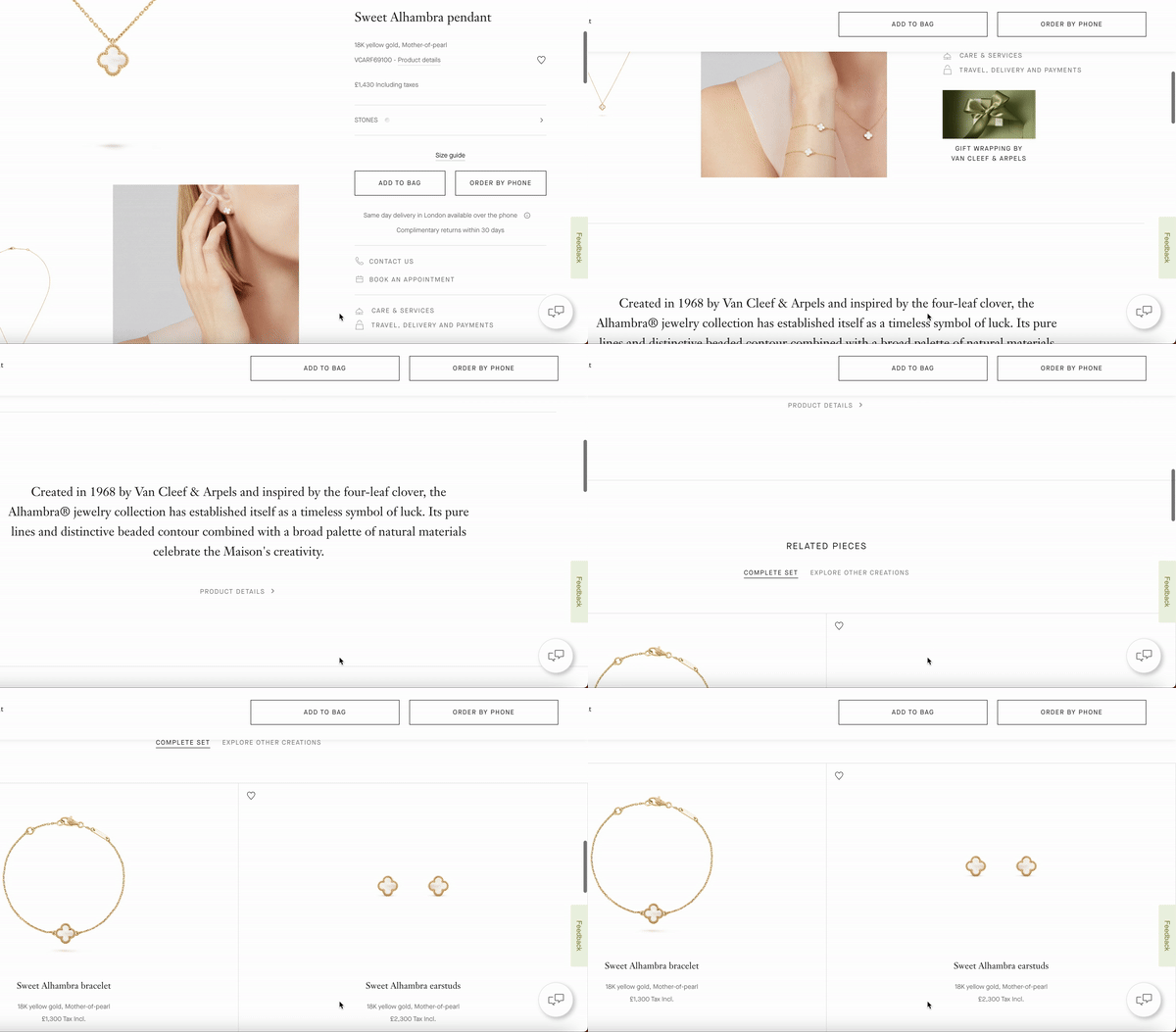
Van Cleef incorporates a subtle yet effective sticky ‘add to cart’ section that appears as the viewer scrolls down the page. This serves as a subtle cue to encourage the viewer to make a purchase and prevent page abandonment, all while complementing the overall design and functionality of the site.
Product recommendations and upsells / cross-sells
Upselling and cross-selling, though different, often work hand in hand to elevate the overall AOV.
- Upselling suggests upgrades to enhance the functionality of the original item, typically showcasing higher-priced alternatives.
- Cross-selling prompts users to consider complementary products to what they're currently viewing.
Having already captivated the user's attention through the PDP, this becomes a prime opportunity for the brand to present tailored recommendations, alongside upselling and cross-selling. Where there is sufficient data to provide recommendations, personalisation is key, as 80% of consumers are more inclined to make a purchase when offered a personalised experience.
These recommendations, typically found on the PDP, can also be displayed in the user's shopping cart or post-purchase, capitalising on their heightened intention to buy. These tactics not only help luxury brands capture and retain consumers, but also maximise customer lifetime value, helping the brand to maintain its competitiveness.
Tailoring recommendations to meet consumers' needs fosters long-term loyalty, providing the exclusive experience vital in the luxury market.
Fendi
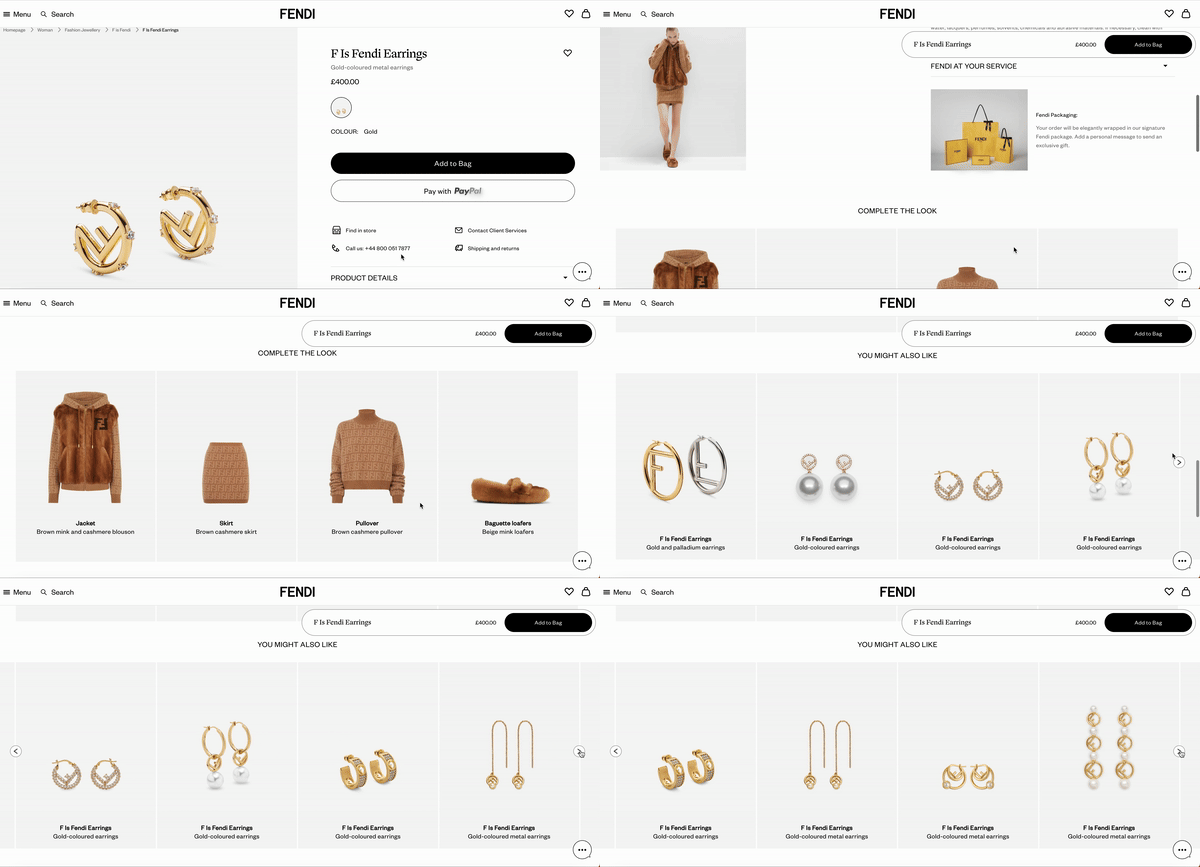
Fendi offers a 'Complete the Look' section, allowing consumers to easily shop the entire outfit featured by the model, including the showcased product. Additionally, Fendi incorporates personalisation into the consumer journey by tailoring the recommendations to align with the user's recent views.
Visual and shoppable UGC
To go beyond a purely transactional relationship, visual and shoppable UGC emerges as a powerful form of social proof. For luxury brands aiming to provide an authentic experience, integrating these tactics onto the PDP is key.
Using real people not only fosters engagement but also cultivates a sense of community - an integral aspect for luxury and premium brands. To highlight its significance, 84% of millennials stated that UGC from strangers influences their purchasing decisions to some extent. As millennials are projected to dominate the luxury consumer base by 2026, leveraging this feature becomes increasingly crucial.
Sweaty Betty
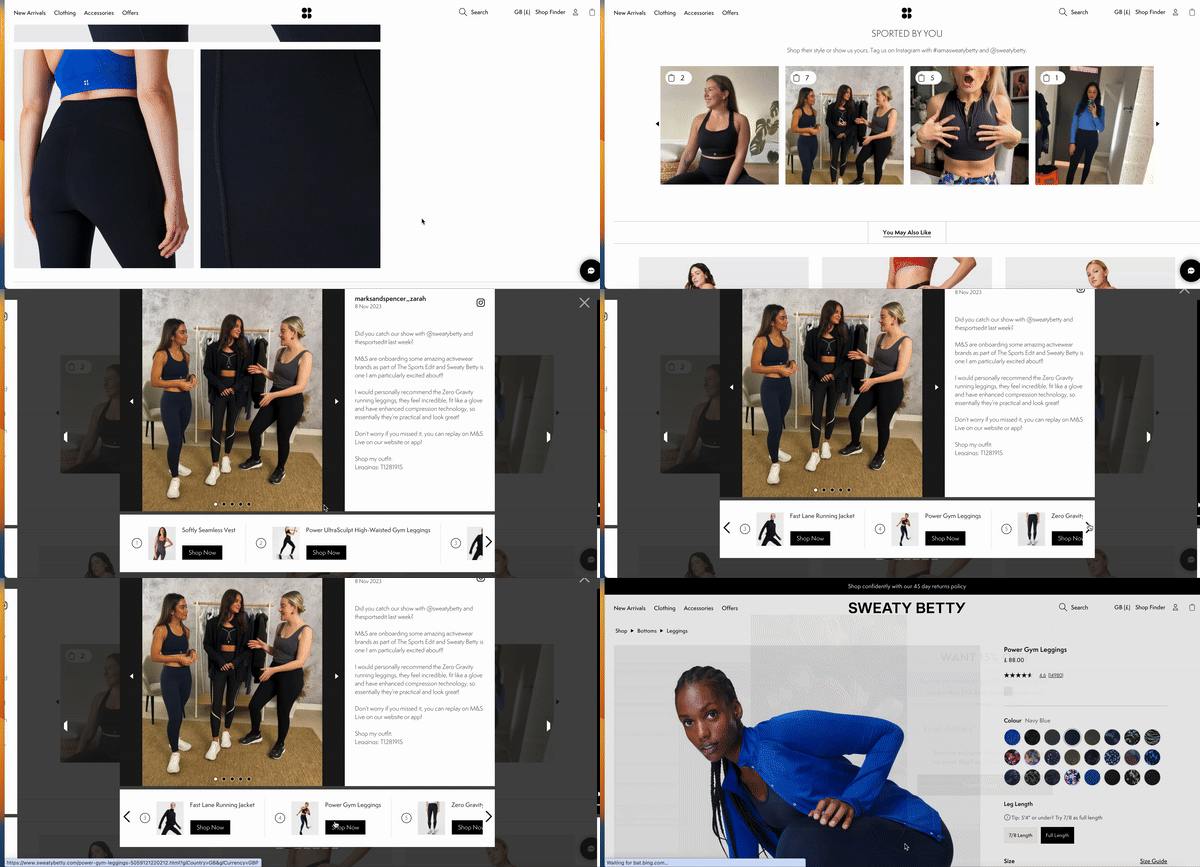
As you scroll down the PDP, Sweaty Betty offers a "Sported by You" section featuring content sourced from Instagram in a carousel format. Within this carousel, users can click on the images to explore the featured products, which are linked for accessibility. This intuitive design allows for easy navigation around the website.
Final thoughts
A high-quality PDP is a critical tool for standing out in the luxury and premium market and driving conversions. While PDPs may differ based on products and brand identity, maintaining consistency across the site is essential. Understanding the consumer journey and addressing pain points on the PDP are vital for optimising conversions and building brand loyalty.
Key components of an effective PDP include:
- Understanding information hierarchy and relevance to your product
- Providing comprehensive product education through detailed descriptions, imagery, sizing guides, and shipping information
- Incorporating trust signals and reviews
- Implementing conversion tactics such as sticky add to cart, cross-selling, upselling, and visual, shoppable user-generated content (UGC)
If you require assistance in optimising your PDP, feel free to get in touch.
Subscribe to our newsletter
Our monthly newsletter is designed to be the most actionable and inspiring eCommerce newsletter in existence, combining examples of eCommerce innovation, benchmarking insights from the industry, and the latest news and eCommerce trends.
By signing up you are agreeing to our privacy policy.