
Sustainability in Luxury Fashion - How Premium Brands Are Embracing Sustainable eCommerce Practices
As the global fashion industry grapples with its significant carbon footprint, the question arises of how sustainable luxury and premium fashion is, and what can these brands do to offset the environmental impact of their eCommerce store?
Sustainability is largely viewed under three pillars: the economy, society and the environment, however they are all somewhat interlinked. The debate surrounding the environmental impact of premium and luxury brands versus their fast-fashion counterparts is a nuanced one.
Is luxury eCommerce sustainable?
The argument often leans towards the belief that limited production makes these high-end brands more sustainable. However, a closer look reveals that even within the realm of exclusivity, environmental pollution and resource exploitation persist. As the luxury eCommerce industry continues to grow, the need for sustainable practices becomes more pressing.
The fashion industry is notoriously known for its environmental impact. According to the United Nations Environment Programme, the fashion industry accounted for up to 10% of the global carbon dioxide emissions in 2022. Although the specific contribution of premium and luxury brands to this figure remains unclear, it illustrates the need for the fashion industry to reassess its practices.
The sustainability fashion revolution
The emergence of sustainable fashion traces its roots back to the 60s and 70s, with 'punks' and 'hippies' leading the change by upcycling items and embracing natural fabrics. However it wasn’t until the 2010s when many premium and luxury brands started to embrace these practices within their business model.
In a saturated market, brands which provide creative ways of becoming more sustainable inadvertently gain competitive advantage, and perhaps in some scenarios, tap into untapped markets.
Consumer behaviour is continually evolving and there has been a rise in conscious consumerism over the past few years. Consumers still wish to buy the products and services they need, and approximately 85% of global consumers are willing to invest in brands which reflect their lifestyle values. Today, consumers are placing a greater emphasis on factors such as durability and repairability when making purchasing decisions.
The responsible sourcing and manufacturing of products have also become key considerations, reflecting the growing consumer expectations of brands being socially and environmentally responsible. Women, in particular, are found to go out of their way to ensure the items they purchase align with sustainability standards, and as the cost of living continues to rise, aligning with consumer values is essential to ensure purchases are made.
Consumers may scrutinise sustainability at all stages of the consumer journey. From browsing to purchase, and even post-purchase, the emphasis on eco-friendly practices becomes a critical factor in shaping the narrative of a brand. For example, a McKinsey study found consumers rely on touch points such as the brand website (42.7%), and tags on the item (39.1%), to understand whether a brand is sustainable. Ultimately if done and conveyed correctly, brands can strengthen trust and loyalty with consumers.
How can premium and luxury brands become more sustainable?
1) Traceability and transparency
More brands are providing full disclosure and information as to how an item was produced throughout its supply chain. Interestingly The Sustainable Luxury Consumer Report 2021 highlighted how lucrative the sustainable jewellery market is, stating 77.5% of consumers would pay more for traceable jewellery. Consumers feel more connected to their purchase due to having full knowledge of the item’s journey, enriching the purchasing experience. This includes open information regarding sourcing of raw materials, labour practices, and the impact they have on the environment.
Whilst this is a clear benefit for the consumer, on the logistics side for the brand, having real-time information regarding the location and availability is important to streamline the retailers supply chain and maintain customer demand. Furthermore, ensuring there is a transparent supply chain allows quality control to be put in place with reassurance that only the highest quality materials are used.
Despite several brands providing this information voluntarily, the EU is working on implementing a Digital Product Passport (DPP) within the fashion industry to further enhance transparency. Built on blockchain for secure and accessible data, a care label with a QR code or barcode allows customers to easily scan and access information. DPP’s are forecast to come into effect by 2026/27, with 2030 being when all products are to be covered.
Brands doing this well - Monica Vinader
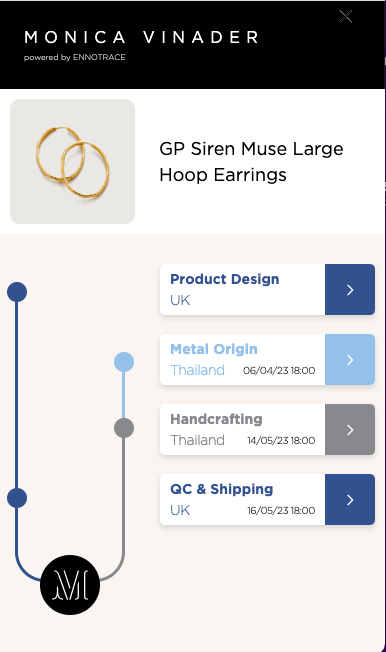
The sustainable jewellery premium brand offering modern and chic go-to items won a Queen’s Award for Enterprise in Sustainable Development, reinforcing their dedication to ethical designs and environmental responsibility in 2022. Monica herself states in their sustainability report “I want to prove that luxury and sustainability can co-exist”, a philosophy embedded throughout their business practices.
Navigating the website is a seamless experience, providing insightful information about their sustainable initiatives. Cleverly integrated touchpoints, such as a dedicated sustainability section in the sticky navigation guides users to explore details about designs, materials, and factories. One notable feature is the implementation of a product passport, presented in a sleek and clean design. Clicking into each product reveals more information, underscoring the brand's commitment to transparency and quality.
While the product passport may not be available for every item on the site, its incorporation serves as a noteworthy example of elevating the customer experience through enhanced transparency and information accessibility.
2) Packaging
As consumers become more savvy about sustainability, premium and luxury brands are redefining their approach to packaging. Contrary to a common misconception that exclusivity requires excessive packaging, leading brands like Gucci and Burberry are proving this wrong.
Globally, over 100 billion packages are shipped annually across 13 markets, contributing to the significant use of single-use plastic in packaging, which becomes waste within a year. To address this issue, brands are forging partnerships with suppliers committed to responsibly sourced materials, favouring recycled or FSC-certified resources. A shift towards mono-material packaging made from recyclable materials is gaining momentum, not only bolstering sustainability, but also reducing energy consumption during recycling. This approach eliminates the need for material separation, presenting a win-win scenario.
Brands doing this well - Stella McCartney

Stella McCartney is one of the poster children of sustainability within premium brands. Pioneering eco-friendly practices since its establishment in 2001, McCartney has been ahead of the game, with the brand integrating sustainability into every stage of its supply chain. This year, Stella McCartney introduced the first ever luxury handbag made from Mirum, a plant-based material.
In 2017, the brand transitioned to TIPA Sustainable Packaging Solutions, replacing plastic and industrial cast film packaging in their supply chain. TIPA's fully compostable packaging decomposes into compost after use. Stella McCartney also showcased the use of a compostable cast film in 2018 for guest invitations at her Paris Fashion Show. Other premium brands, including Dutch brand Scotch & Soda, followed suit by partnering with TIPA in 2021. Stella McCartney continues to collaborate with innovative partners, developing alternatives that cleverly replace single-use packaging and plastics.
3) Providing a resale platform
Offering resale of luxury goods is disrupting the luxury fashion market, with the emerging trend being driven by both Millennials and Gen Z, with 35% of both groups having purchased second hand luxury goods in 2022. The market is proving to be a lucrative one with Forbes valuing it at $38bn in 2021, and is one of the fastest growing areas in luxury.
In the past, this initiative was seen as a potential threat to a luxury brand’s image, reputation, and exclusivity, however, with careful implementation, brands can still provide the consumers with the same luxury experience on their site. Currently, the most popular items to be sold within the resale market are watches and jewellery making up half of the luxury resale market, with handbags and shoes consisting of over a third to the market.
Brands doing this well - Farfetch
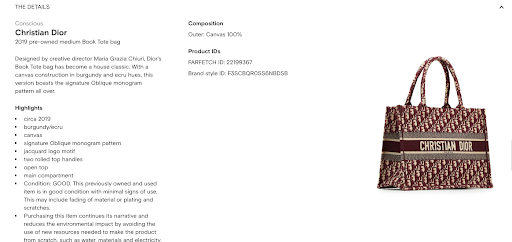
Digital marketplace, Farfetch, sells luxury items from designer brands including Balenciaga, Gucci, Miu Miu, Prada and more. Following a successful pilot of their ‘pre-loved’ offering in the US, Farfetch participates in the circular economy by offering a resale platform allowing consumers to buy and sell their designer pieces.
The initiative is simple; you send the item you wish to sell and Farfetch will check the authenticity before giving a quote. If the user agrees, they will be given the amount in credit to be used on their site - ultimately not cannibalising primary sales whilst simultaneously offering items a new lease of life.
There are marketplaces, e.g eBay, that have been in the industry for longer than and are more established than Farfetch, however by having a reputable brand checking the authenticity of each item instils consumer confidence, with the likes of eBay not being able to offer this.
What is noticeable is how the pre-owned page mirrors that of their other pages - it is simple and streamlined, and gives the users the same luxury experience. Given that 85% of shoppers place high importance on product information and visuals in purchasing decisions, Farfetch provides high-quality photos, ensuring consumers are well informed and guided seamlessly through the purchasing journey. The competition within the resale luxury is fierce, so ensuring ways to offer UX will help the brand to stay top of mind.
4) Giving back to the environment
Naturally, it is near impossible for a business not to have some form of environmental footprint, however, with businesses realising, acknowledging, and implementing strategies to mitigate their impact, they are adopting a philanthropic approach to business. Brands which are proactive are far more authentic in their sustainability efforts rather than, for example, a reactive approach following a greenwashing scandal. Consumers can see past the sustainability reports and they want real tangible results.
Brands doing this well - Solios
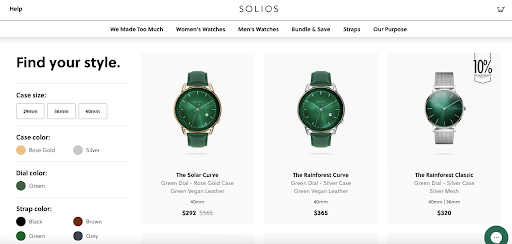
Solios are the first watch brand to receive B Corp status. Their product innovation is impressive, placing solar-powered tech in their watches to replace batteries, with batteries being the major source of watch overconsumption.
Their business model and company values are built on sustainability, and they realise giving back to the environment is not a mere checkbox exercise or a marketing fad. They therefore pinpointed partners to collaborate with that are the most transparent and effective, with The Rainforest Trust being identified.
Cleverly launching a new range in 2021 when there was a trend for green watches, every purchase of the green dial watch equates to donating 10% of the revenue to The Rainforest Trust. To put this into context, every watch sold results in restoring ~10 acres of rainforest, and in 2022 Solios had accumulated a total donation of $30,000. Solios continues these efforts with plans for further partnered ranges, also donating 1% of every other purchase from different lines.
In an industry filled with noise, Solios stands out by owning transparency and honesty, differentiating itself as a brand genuinely dedicated to environmental causes.
5) Dealing with return and overconsumption
Returns pose a challenge across various industries with the average return rate for eCommerce being 20% to 30%. Unsurprisingly, the premium and luxury fashion sector grapples with this issue.
Several strategies can be employed to address this:
- Charging for Returns: Brands, such as Sunspel, are introducing return charges to discourage overconsumption. While initially prevalent in fast fashion, this practice is making its way into the luxury industry.
- Hub Drop-off: An alternative to shipping each item individually involves establishing hubs where returns can be consolidated for more eco-friendly transportation.
- AI-Powered Solutions: Recognising that inaccurate sizing (46%) is a significant reason for returns in eCommerce, brands are turning to AI-powered tools to enhance UX. AI-driven chatbots and virtual try-ons help address the lack of information and the inability to try items on when purchased online.
- Email comms: Introducing a strategic window for order amendments or cancellations in confirmation emails is a proactive measure to reduce return rates.
Final thoughts
While brands make an effort to implement sustainable strategies, it is essential sustainable messaging must be consistent throughout the brand, ensuring it ‘rings-true’ with consumers and remains authentic. Understanding the multifaceted ways in which brands can impact the environment and effect positive change is instrumental in mitigating their environmental footprint.
Key areas of focus:
- Transparency
- Resale
- Packaging
- Giving back to the environment
- Returns
These approaches are intricately interconnected, and it is refreshing to see when a brand embraces more than one factor in their sustainability effort. As regulations and consumer behaviour continue to evolve, brands must stay agile to adapt to market changes. While progress is evident, there is still much ground to cover, and it is exciting to see the innovative ways premium and luxury brands are becoming more sustainable.
Subscribe to our newsletter
Our monthly newsletter is designed to be the most actionable and inspiring eCommerce newsletter in existence, combining examples of eCommerce innovation, benchmarking insights from the industry, and the latest news and eCommerce trends.
By signing up you are agreeing to our privacy policy.