
An Overview of the Crossovers Between Influencer Activity and Affiliate Marketing
Over the past few years, we have started to see a change in the typical way that brands and the affiliate industry view influencer marketing. The whole landscape has started to shift, as the industry has continued to evolve and influencers have grown in popularity. In 2024, Awin reported a 118% uplift in influencer registrations between the years 2022 and 2024.
As a result, the way in which influencers monetise their content has shifted, seeing the rise in affiliate links being used in various ways so influencers are able to earn commission on sales driven by their content. Content creators can leverage their audience and drive conversions for brands by blending authentic content creation with performance-based marketing, making both strategies mutually beneficial for influencers and businesses.
By leveraging the credibility of influencers alongside the performance metrics of affiliate marketing, brands can create a seamless process for managing influencer activity.
How have affiliate networks adapted to support influencers?
Tracking
Affiliate networks offer influencers the opportunity to join as publishers and collaborate with hundreds of brands. These networks simplify the process of creating affiliate links that can be easily integrated into their content. For instance, Awin’s Link Builder Tool enables influencers to generate deep links to specific product pages, making it easy for both influencers and brands to track sales or leads generated by promotions.
Internal reporting tools, such as the Publisher Performance Report, provides advertisers with detailed insights into an influencer campaign's impact, covering key metrics such as traffic, sales, and revenue. Tracking links ensure that influencers receive credit for all eligible sales, even if a purchase is made at a later date. Many affiliate programs use cookies that track user behaviour for a set period (typically 30 days), ensuring the influencers are credited when users return to make a purchase.
Monetary rewards
Using affiliate networks to manage influencer activity also allows brands to collaborate with influencers on a commission basis rather than a traditional fixed fee. The reward structure typically works as follows:
- Commission Per Sale: Influencers earn a percentage of each sale made through their affiliate links. The commission rate can vary widely depending on the product, brand, and affiliate program.
- Tiered Earnings: Some networks offer tiered commission structures, where influencers can earn higher percentages or bonuses based on the volume of sales or leads they generate.
By using this commission-based model, advertisers only pay for sales directly driven by the influencer, eliminating the risk of investing in campaigns that do not deliver results.
Voucher code attribution
As social media creators and influencers continue to play a growing role in affiliate marketing, networks including Rakuten and Awin have introduced a voucher attribution tool that allows advertisers to increase their reach and reward influencers for the sales they drive. Traditionally, commission was only rewarded for sales made through affiliate links on a last-click basis, but with this tool, influencers who use voucher codes exclusively can also have their sales tracked and credited through the network, no matter their place in the customer journey.
An overview of affiliate networks and their influencer offerings
Affiliate networks that collaborate with influencers connect brands to content creators, offering access to partnership opportunities through affiliate programs. Influencers can earn commissions by promoting products as affiliates through these platforms. Networks like CJ Affiliate, Awin, and Rakuten simplify the process, making it easier for influencers and brands to work together.
Awin
Awin connects influencers with brands through a streamlined affiliate marketing process. After registering on the Awin platform and creating profiles that outline their content, audience, and promotional preferences, influencers can explore and apply to relevant affiliate programs.
Once approved, they receive unique affiliate links or codes from brands. These links or codes are shared through the influencers’ content - whether blog posts, social media updates, or videos - driving traffic and potential sales to brands.
Awin’s platform tracks performance through a personalised dashboard, offering insights into clicks, conversions, and commissions earned. Awin also handles the tracking and processing of these commissions, ensuring influencers are paid once transactions are validated.
CJ Influence
Similarly, CJ Influence connects brands with a vast network of content creators and media partners, offering diverse partnership opportunities aligned with specific goals. Through an advanced in-platform recruitment tool, advertisers can easily discover influencers and content partners through keyword searches and promotional methods, while providing valuable audience insights. Powered by its Fluency tech platform, CJ Influence offers access to over 25 million influencers ensuring brand safety, compliance, and accurate ROI tracking for influencer campaigns.
Rakuten Advertising
Rakuten Advertising, extending its affiliate management services, has partnered with influencer marketing platform Mavrck since 2014. Mavrck has worked with over 3 million content creators and offers advanced tools for influencer discovery, curation, onboarding, and reporting. Its centralised dashboard allows brands to manage both affiliate and influencer campaigns, providing a holistic view of their full-funnel affiliate marketing strategy.
An overview of influencer subnetworks in the community
A traditional subnetwork consists of multiple affiliates grouped under a single publisher name. Influencer subnetworks operate similarly, allowing content creators to join smaller networks and collaborate under one publisher. These subnetworks enable influencers to collectively participate in affiliate programs, streamlining their partnerships and branding under a unified publisher identity.
LTK
LTK is the leading influencer platform, partnering with thousands of global retailers and hosting the largest creator community, which enables influencers to effectively monetize their content.
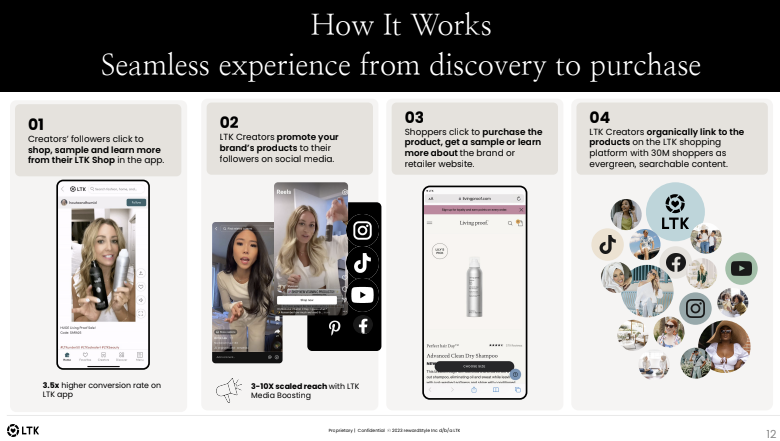
Benefits include:
- Brands gain access to a vast network of influencers, streamlining the growth of their influencer marketing efforts. LTK also provides comprehensive full-funnel reporting that offers valuable insights into campaign performance. However, LTK restricts visibility into which influencers drive sales to prevent brands from bypassing the platform and forming direct partnerships.
- LTK manages all aspects of creator campaigns, including recruitment, coordination, and payment, ensuring a seamless experience for brands. However, this service does require an additional budget, with pricing contingent on the size of the campaign.
- LTK also has a self-service offering called LKT Connect, starting at $5K annually, which provides advertisers access to 30 creators per month, with a maximum annual campaign budget of $25K.
’LTK Optimise’ is a white-glove solution for brand campaign management, recommended for advertisers needing a full-service approach for strategy, management and campaign execution. However, this option requires a minimum investment of $50K investment per campaign.
Metapic
Metapic is a self-service influencer platform connecting brands directly with creators in key markets, including the UK, Australia, and Germany.
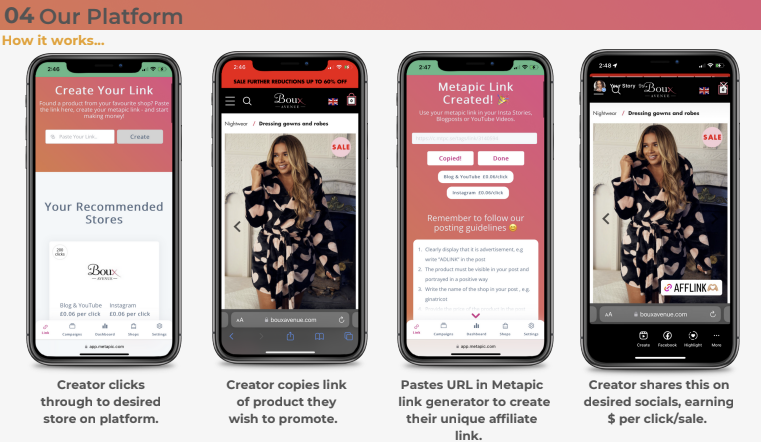
Benefits include:
- Brands can engage with influencers on a commission-only basis, with a minimum cost-per-action (CPA) of 12%.
- The platform provides full access to a reporting dashboard, offering insights into clicks, average order value (AOV), and conversions.
- Metapic ensures full transparency, allowing brands to view the content created by influencers and access their social media handles. Additionally, brands can repurpose content created by influencers during the partnership for other marketing activities.
Managed gifting campaigns start at around £1.7K, which includes up to 10 influencers in the package.
Stylink
Stylink connects advertisers with a global network of over 190,000 influencers, providing individually tailored placements that resonate with niche creators in each target market. This approach helps drive brand awareness, increase traffic, and boost sales.
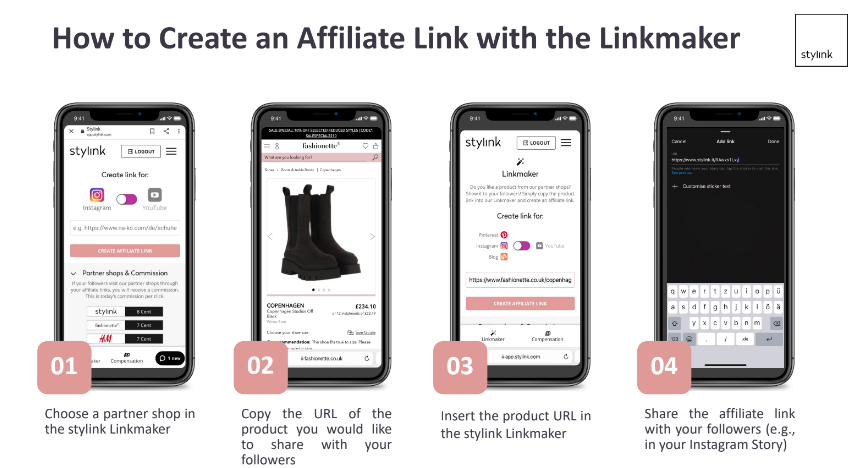
Benefits include:
- Creators earn on a cost-per-click (CPC) basis, while advertisers operate on a traditional cost-per-action (CPA) framework.
- Stylink provides a ‘Link Maker’ tool that influencers can easily access on the platform to create links for various social media platforms, including Tiktok, Pinterest, and Instagram.
- Stylink is currently available in 13 countries including the United Kingdom, USA, Poland, and Australia.
The partnership is purely based on a CPA model, with no additional tenancy investments required, meaning advertisers incur costs only when a purchase is made.
Final thoughts
The convergence of influencer activity and affiliate marketing presents a powerful opportunity for brands to drive performance-based results while maintaining authenticity in content creation. This model ensures influencers are paid based on measurable impact, while offering a cost-effective, scalable way to collaborate.
Platforms like LTK, Rakuten, and CJ Affiliate streamline influencer partnerships, offering flexible commission-based where brands only pay for results. The detailed reporting tools provided by these networks allow brands to make more informed, data-driven decisions, optimising future campaigns and identifying top-performing influencers.
For brands lacking in-house influencer teams, these networks and platforms also offer valuable expertise and support, helping them navigate and scale their influencer efforts. As the industry continues to evolve, affiliate networks will remain crucial in connecting brands with creators and driving successful collaborations.
Subscribe to our newsletter
Our monthly newsletter is designed to be the most actionable and inspiring eCommerce newsletter in existence, combining examples of eCommerce innovation, benchmarking insights from the industry, and the latest news and eCommerce trends.
By signing up you are agreeing to our privacy policy.