
Pulse eCommerce Survey (Q3 2023 Edition): A Commentary
In the second edition of our recent survey of over 50 senior eCommerce and marketing leaders, we have gained valuable insights into the current state of trade within the industry as brands approach peak and the end of 2023. We have now held this survey for a second time, doing so earlier in the year in Q2, and have brought in comparison data to understand changes since our last round of evaluation.
As we delve into the general state of trade, it becomes evident that brands, on average, perceive their year-to-date performance as falling short of expectations - so why may this be the case? Our exploration extends to international markets and we also evaluate the effectiveness of different marketing channels, shedding light on the successes and challenges faced by brands in the last six months.
Looking ahead to the remainder of 2023, our survey unveils the top priorities for brands. These findings, along with insights on budgets, underscore the ongoing challenges and strategic considerations within the eCommerce landscape for premium and lifestyle brands as planning begins for 2024.
Responses
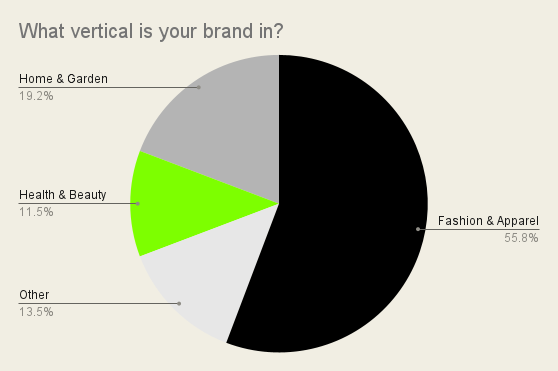
We received responses from over 50+ senior eCommerce and marketing leaders from leading lifestyle brands and retailers - giving us a high quality sample of some of the world’s top eCommerce experts from aspirational and pioneering brands. 56% of the brands who shared their insight were in the fashion and apparel vertical, 19% were in home and garden brands, 12% were health and beauty brands. 14% were brands from other sectors such as technology, electronics, hobbies etc.
For clarity on the respondents, 52% had eCommerce-specific titles, and the others were either marketing, growth or broader executive titles.
General state of trade
Looking at the year to date, brands felt that overall performance (in terms of net revenue) had not met expectations. On a scale of one to ten when asked ‘year-to-date, how has your overall performance compared to your targets or expectations?’, brands averaged 5.83.
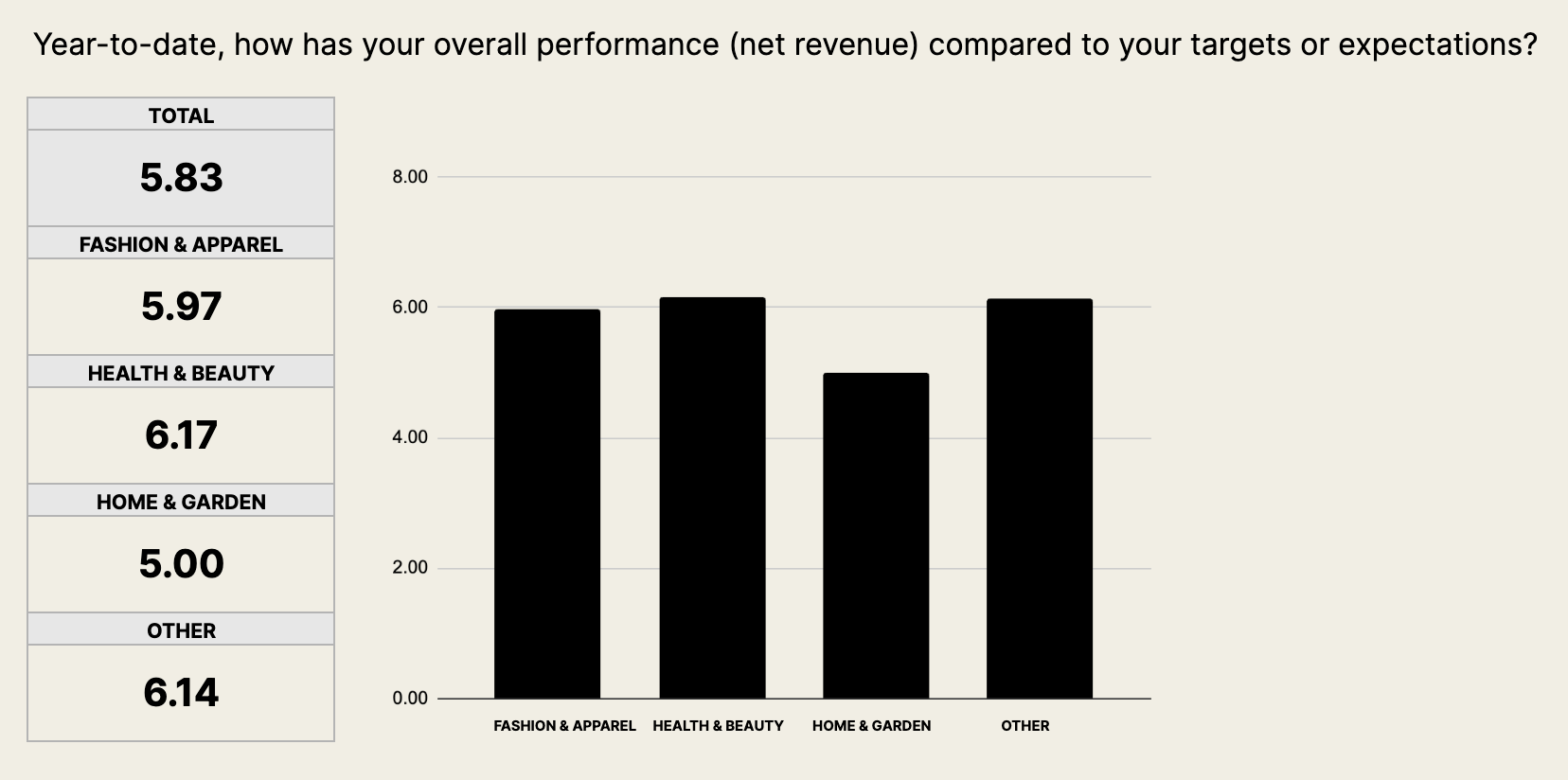
This did vary across verticals, with fashion brands slightly above average at 5.97. The health and beauty brands were the most positive (albeit still low), with an average rating of 6.17.
We also asked brands to compare performance more recently, over the last three months. On a scale of one to ten when asked ‘over the last 3 months, how has your overall performance compared year-to-date?’, brands averaged 5.63. This was very similar to year to date.

There was less variation by sector here, with fashion brands averaging 5.86 and health and beauty brands at 5.67. Home and garden brands also responded at 5.00, which is a trend we’ve seen with some of the retailers we work with (YoY trends not as positive as some of the fashion brands, in particular).
Markets and channels
Internationalisation is always a key topic amongst brands looking to scale, so we asked brands which markets they’ve seen the most positive growth in.
The market with the most growth was Europe (excluding UK), with 67% of brands commenting that this was a positive for them. This was closely followed by the US at 65%.
Other significant markets included the Middle East at 13% and Australia at 12%.
This is not a massive shift from the last survey we conducted earlier this year, where the US was the top market, followed by Europe. We would’ve also said that the US would’ve been the primary growth market for a lot of our clients around the time of the previous survey, but unfortunately we have seen a drop in performance for many over the last few months. It’s still the primary focus for many of our clients, however trade isn’t as positive as it was last year (or even earlier this year).
We also asked brands which channels were performing well, and which ones were underperforming. When asked which channels have performed well over the last six months, the most successful channel on average was paid search - with 73% of brands stating that this was one of the most effective channels for them for acquiring new customers. Similarly, paid social was also high at 60%.
There was quite a large jump to the next successful channels, which were organic search at 46% and affiliates, partnership and influencer marketing at only 33%.
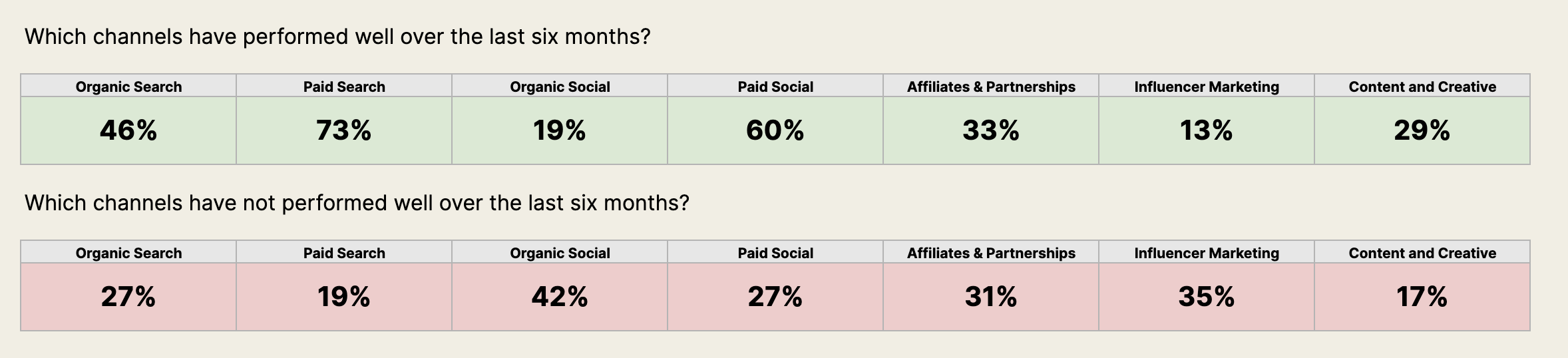
Now, when asked which had been the most unsuccessful channels over the last six months, most brands answered organic social at 42% - a stark contrast between organic and paid social. This was followed by the second most unsuccessful channel for brands, which was influencer marketing at 35%. This is fairly in-line with the trends we’ve seen amongst channels over the last three years.
Priorities, focus and budget
Looking ahead at the rest of 2023, we asked brands what their top eCommerce priorities were for the next six months. The biggest priority was new customer acquisition, with 65% of brands commenting that this was their greatest focus. 44% of brands also commented that increasing conversion rate was a focus, which isn’t surprising.

Other focuses included customer retention and improving profitability at 23% each, increasing customer lifetime value at 17%, maximising international markets at 15% and finding new international markets at 12%. Again, this is in-line with what we hear when speaking with senior stakeholders at brands. The only other one that wasn’t listed was some aspects of CX, which is a big priority for some of the larger brands we work with.
Comparing these stats to last year, there’s not a lot of change. In our last survey, new customer acquisition was a clear leader (70%), followed by improving conversion rate (40%).
Another question we asked brands was on creative budgets. We asked brands what percentage of your performance marketing budget is spent on content and creative? The average percentage here was 13%, with fashion and apparel brands spending 16% on average.
Setting budgets and understanding CoS
When identifying budgets and priorities, it is important to use a model that makes sure your set budgets are sustainable and profitable, such as Cost of Sale (CoS) or Marketing Efficiency Ratio (MER). However, there are a number of factors to consider here - such as profit margin, fulfilment costs, lifetime value, return rate, and the ratio of new to returning customers. These all play a role in determining your allowable CoS. The new / return split often leads to the use of Customer Acquisition Cost (CAC); however, despite all of these considerations, we do generally observe consistent trends when analysing CoS across our clients.
We’ve worked with brands who have scaled massively with CoS ranging up to ~40%. This is a lot less common now with more scrutinised media investment and profitability being a central focus for almost all brands. In our experience, most of the brands we work with tend to maintain a CoS around 20%. If your CoS gets closer to 30%, it likely means you heavily rely on performance marketing and/or that you are looking to scale. On the other hand, if it falls below 8%, it's probable that you're not investing enough to scale your business and realise incremental value.
Once brands consistently maintain their CoS, we generally recommend experimenting with different levels of investment to see how it impacts revenue. For instance, testing a slightly higher CoS might lead to additional revenue, which supports overall profitability (more revenue relative to fixed costs)
Final thoughts
Finally, the last question we asked was how optimistic brands were heading into peak trading and Q4, on a scale of one to ten. The average rating was 6.60, and all verticals responded similarly. This was certainly lower than our last survey, where respondents rated 7.4 out of 10 for optimistic - albeit, this was earlier in the year where brands may not be impacted by seasonal trading events.

As an agency, we’re fairly optimistic going into the peak, but given the drop in performance many brands have seen over the last few months, we can understand that there is caution.
Subscribe to our newsletter
Our monthly newsletter is designed to be the most actionable and inspiring eCommerce newsletter in existence, combining examples of eCommerce innovation, benchmarking insights from the industry, and the latest news and eCommerce trends.
By signing up you are agreeing to our privacy policy.